What Food Is Kefalonia Famous For?
The dishes Kefalonia's food tours and cooking classes actually serve, from meat pie and riganada to barrel cheese and candied almonds, and where to taste them.
Kefalonia's food record is short and specific. The island's tours and classes serve meat pie, cod pie, riganada, barrel-matured cheese, candied almonds, honey and olive oil, and they pour Robola, Mavrodaphne and Muscat alongside them. This page sticks to what the listings and the verified facts actually name, dish by dish, and then points to the experiences that serve each one.
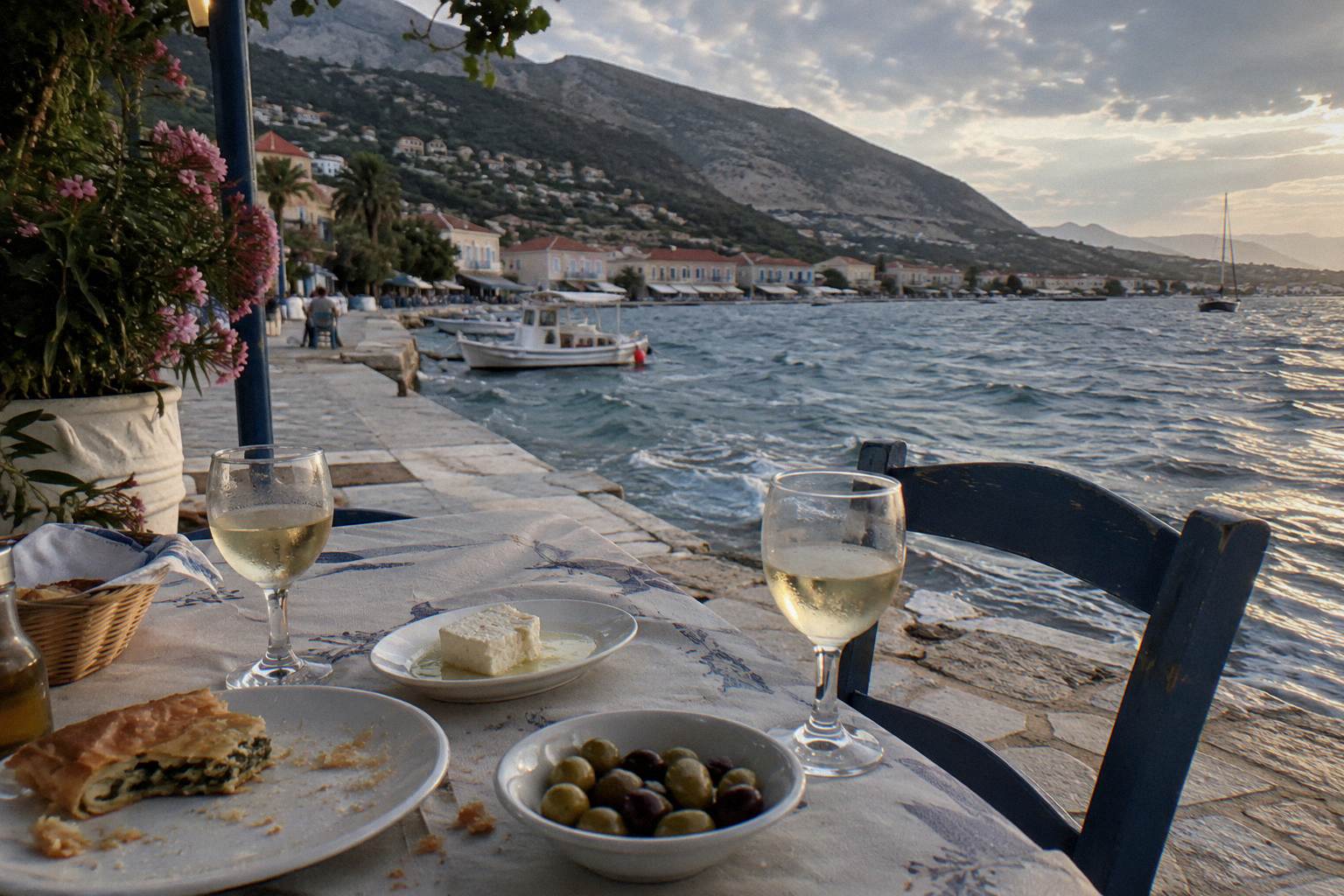
Kefalonia's food tours and cooking classes put a specific short list on the table: Kefalonian meat pie, cod pie, riganada (toasted bread with tomato, oil and oregano), barrel-matured white cheese, candied almonds called mandoles, honey and olive oil, served with the island's Robola, Mavrodaphne and Muscat wines. The record gives no fame ranking or origin story for any of these dishes, so this page does not invent one.
That short list is not a marketing line. It comes straight from what the island's food and cooking listings say they serve. The Argostoli food walk run by Kefalonia Food Tour, for example, lists cod pie, meat pie, riganada, four local cheeses and the local sweets called mantola, alongside a tasting of four different local wines. A cooking class on a farm outside town lists tzatziki, Greek salad, lamb chops and filo pie. The bike food tours list riganada, saganaki and grilled vegetables. That is the honest core of the answer.
What the record does not contain matters just as much. There is no verified source ranking these dishes by fame, and no origin history for kreatopita, bourbourelia or riganada that we are willing to print as fact. So when guidebooks call one dish "the island's most famous", treat that as enthusiasm rather than evidence. What we can say is which dishes appear on which tables, what they are made of where a verified source describes them, and where you can taste them on this island.
If you want to taste several of these in one evening rather than hunting them dish by dish, the three experiences below cover the main ground: a food walk in Argostoli, a hands-on cooking class, and a dinner ride by bike.
The rest of the page takes the dishes one at a time, then the wines poured beside them, then the farm products, so you can decide which experience matches what you actually want to eat.
What Are The Dishes The Tours Actually Serve?
The tours name a fixed set: meat pie and cod pie (both in pastry), riganada (toasted bread with tomato, olive oil and oregano), four local cheeses, mantola candied almonds and a sweet called partokidono on the food walk, plus tzatziki, Greek salad, lamb chops and filo pie at the cooking class, and saganaki and grilled vegetables on the bike tours. Nothing else on the island's menu is claimed for these listings.
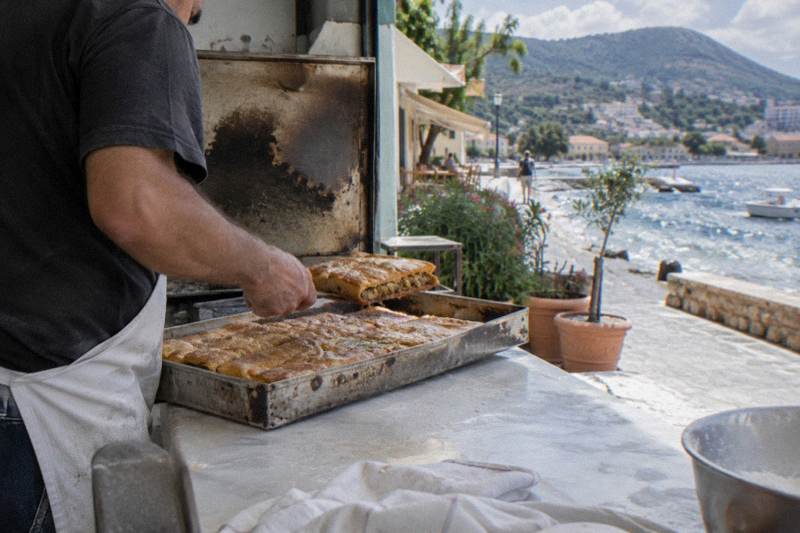
The meat pie is the dish with the most written about it. Verified food sources describe Kefalonian kreatopita as made with three meats (sources name pork, goat and veal, or lamb, pork and beef), rice, tomato, onion and spices such as cinnamon and marjoram, sometimes cheese, in a homemade pastry made with olive oil. It is traditionally eaten on Ascension Day. You can read the dish described in full in this Kefalonian three-meat pie recipe, which matches how the food walk lists it. We print no origin story for the pie beyond that, because the record does not contain one.
Riganada is simpler and appears on three separate listings, which makes it the most-served item in the entire roster. Sources describe it as toasted bread or rusks drizzled with olive oil, topped with tomato, dried oregano and salt, often with cheese and olives, a description you can compare against this account of riganada as a Kefalonian snack. The cheese on the table is worth a sentence too: sources describe the island's white brined sheep and goat cheese as matured in barrels and called feta locally, though it is not covered by the feta PDO, and a local graviera is also made. The almonds, mandoles, are roasted almonds coated in layers of hard sugar caramel.
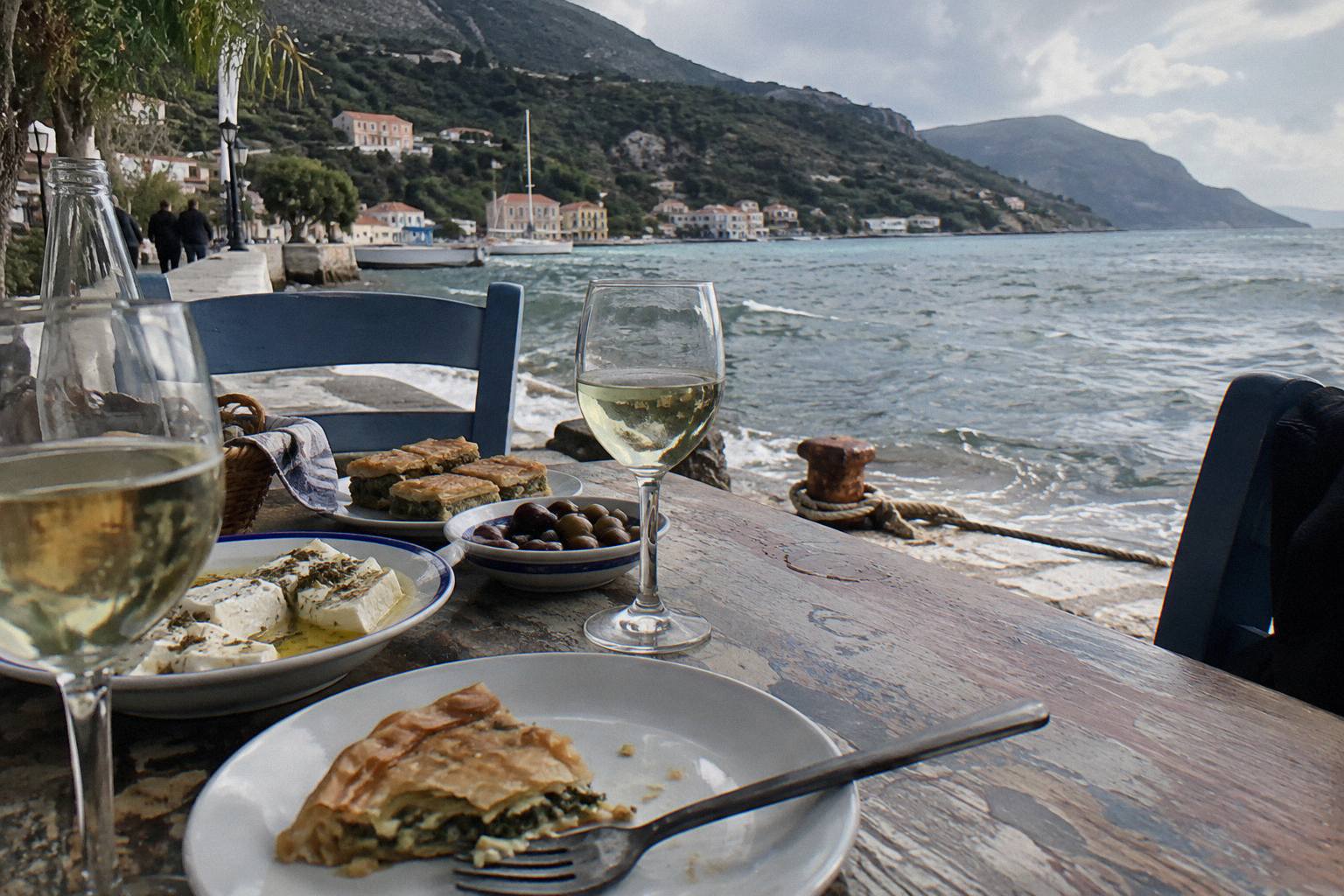
Two small details sharpen the rows above. One local source puts the maturation time for the barrel cheese at a minimum of three months, so the white cheese you taste has been sitting in wood, not brine alone, for at least a season. The mandoles, for their part, are often red in colour, roasted and coated in hard sugar caramel, so expect a glossy sugar shell rather than a soft sugared nut. Neither detail changes what any listing includes; they just tell you what the items on the table actually look like.
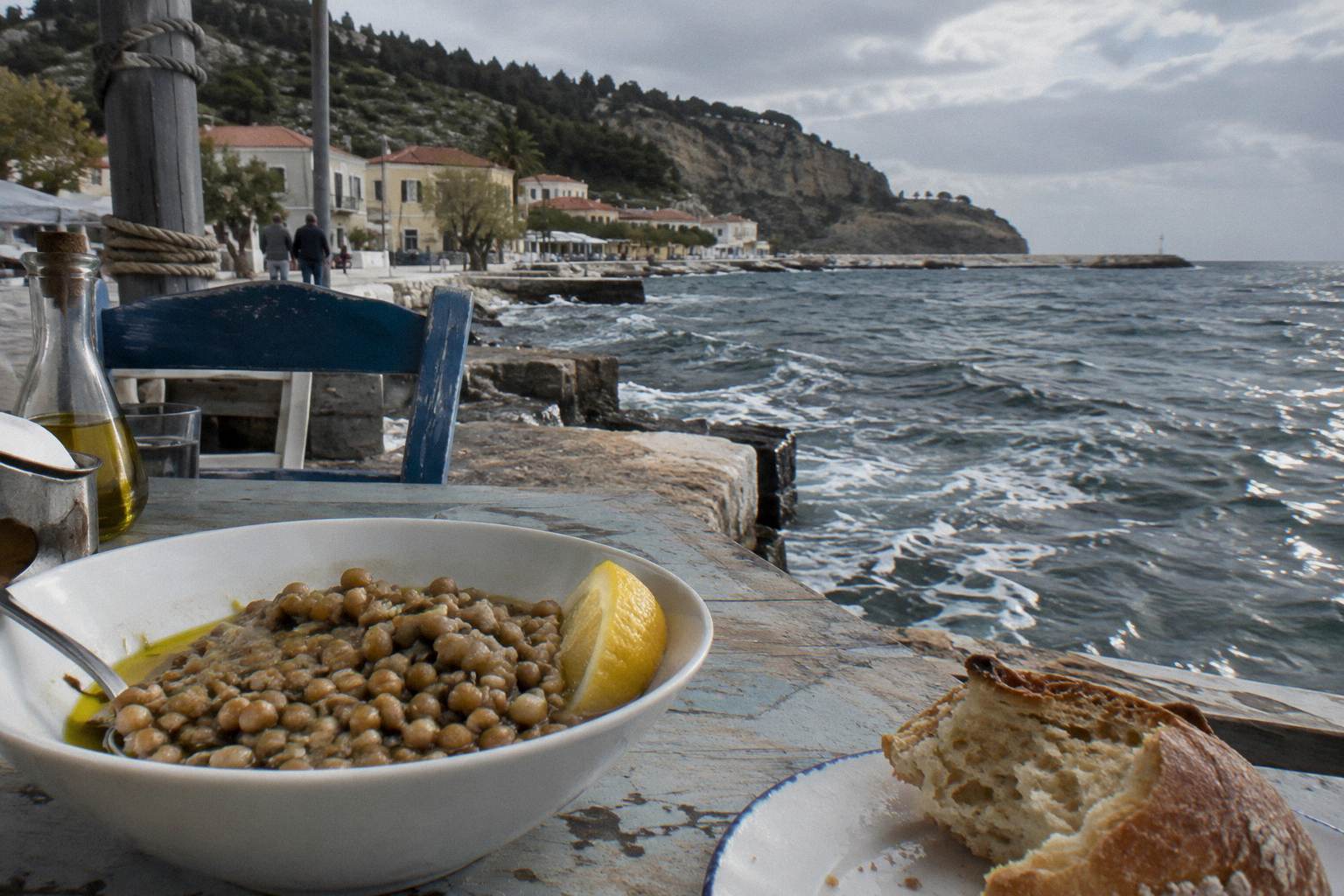
Beyond the roster, the island's written record names other traditional dishes that no listing here claims, and it is worth knowing they exist so you do not confuse them with what you have booked. Bourbourelia is a mix of pulses and grains, chickpeas, white beans, lentils, broad beans, corn, barley or wheat in roughly equal parts, soaked overnight and simmered with onion and salt, then served with olive oil and lemon; it is prepared around the feast of the Entry of the Virgin Mary on about 21 November, and a bourbourelia festival is held at Poros. Aliada is a Kefalonian garlic and potato sauce, a cousin of skordalia, made with olive oil and lemon or vinegar, and often served with fried salt cod and greens. Other named local dishes include tsigaridia, wild greens cooked in oil and garlic, and further pies such as bakaliaropita, which is a salt cod pie, plus artichoke and octopus pies. The cod pie on the food walk listing sits within that wider pie tradition, though the listing itself names only the cod pie, and none of these other dishes appear on any tour in this article.
Here is where each dish actually shows up, tour by tour, so you can match appetite to booking:
| Dish or item | What it is (per verified sources) | Where the listings serve it |
|---|---|---|
| Meat pie (kreatopita) | Pastry pie with three meats, rice, tomato, herbs and spices | Food Tour, Snacks Included (Argostoli walk) |
| Cod pie | Fish pie in pastry, named on the listing | Food Tour, Snacks Included (Argostoli walk) |
| Riganada | Toasted bread with olive oil, tomato, oregano, often cheese | Food Tour; Dine And Bike; Cooking Class, Organic Farm Visit |
| Local cheeses | White brined barrel cheese; four varieties on the walk | Food Tour, Snacks Included |
| Mantola and partokidono | Candied almonds; a local sweet, named on the listing | Food Tour, Snacks Included |
| Tzatziki, Greek salad, lamb chops, filo pie | Farm cooking class menu | Greek Cooking Class, Meal Included (Opuntia Kefalonia) |
| Saganaki and grilled vegetables | Starter plates on the dinner ride | Dine And Bike Tour, Snacks (Alpha Cycling Holidays) |
| Meze | Small shared plates cooked in class | Meze Class At Prickly Pear Farm (Opuntia Kefalonia) |
One caution on that table: the listings name the dishes but do not promise portion sizes, recipes or where each ingredient was made. The food walk serves its items as snacks across several Argostoli stops, not as a sit-down dinner, and bottled water, coffee and tea are excluded from its price. Read "included" on any listing narrowly, exactly as the row states it.
Where Does The Argostoli Food Tour Take You?
The Food Tour, Snacks Included by Kefalonia Food Tour is a shared walk of 2 hours to 2 hours 30 minutes around Argostoli food stops, from €59 per person, rated 4.6 across 17 reviews. It pours four different local wines and serves cod pie, meat pie, riganada, four local cheeses, mantola and partokidono, with free cancellation up to 24 hours before. Bottled water, coffee and tea are excluded.
This is the single most direct answer to the question in the title, because it is the only listing that serves the island's signature pies and sweets in one go. The stops are in Argostoli itself, the island capital, whose waterfront is also where cruise ships dock or tender, so it works as an evening plan straight off the ship or out of a town hotel. The listing does not name the individual shops or tavernas on the route, so we do not either. Read our guide to where to eat local food in Kefalonia for the wider picture around the island.
The 17-review pool is big enough to take seriously but small enough to read yourself; the score sits at 4.6. What the listing promises is a tasting walk, not a full meal: the items arrive as snacks across the stops, with the four wines poured alongside. If a full dinner is the goal, this is the wrong booking, and the next section covers the alternatives. If a structured introduction to the island's food in one evening is the goal, it is exactly the right one. You can see the full itinerary and live price on the operator's live listing, or start from the food-tasting overview at Kefalonia Wine Tasting.
One practical note before you book: the tour is a shared group format, and the listing says nothing about hotel pickup, so plan to make your own way to the Argostoli start. Cancellation is free up to 24 hours ahead, which matters if your cruise schedule shifts.
Can You Learn To Cook Kefalonian Food Yourself?
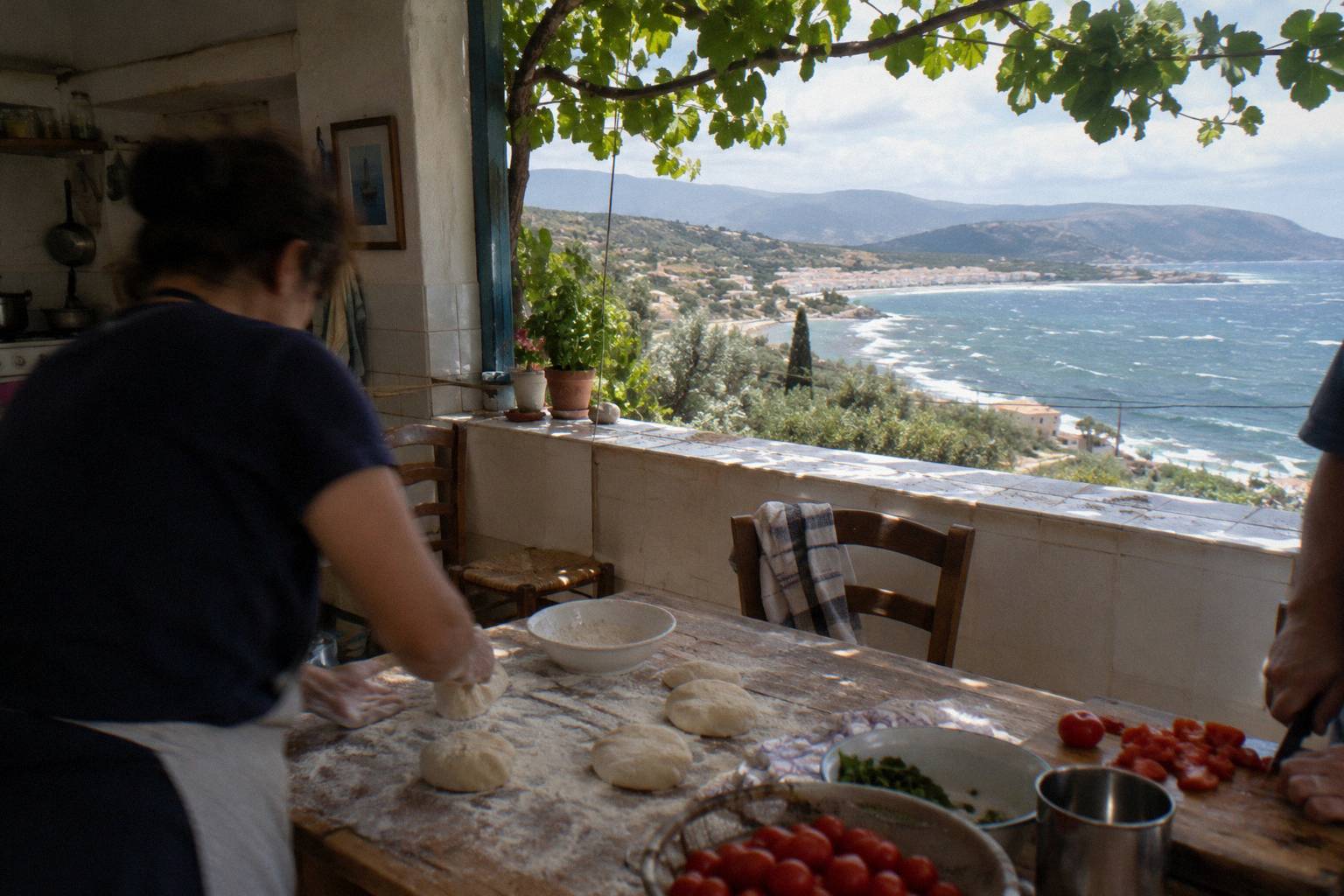
The first of these is the most complete menu. The Greek Cooking Class by Opuntia Kefalonia lists tzatziki, Greek salad, lamb chops and filo pie, with house wine and water included, on a farm setting for 3 hours 30 minutes. It holds a 5 rating from 6 reviews, a small pool, so read the recent reviews rather than trusting the number alone. The Meze Class at the same operator's prickly pear farm is the shorter, cheaper option at from €75 per person for 2 hours, with house wine, ouzo and tsipouro included; it is rated 5 across 4 reviews, again a small number. The operator notes the farm serves no refreshments it considers full of preservatives, so expect the drinks listed and nothing else.
The third option runs differently. The Cooking Class, Organic Farm Visit by KEFALONIA TOURS teaches riganada, tzatziki and other meze, then serves lunch with wine and drinks included, for a small group capped at 12 people. It costs from €135 per person and is rated 5 across 4 reviews, a small pool. All three classes carry free cancellation up to 24 hours ahead, so a weather change or a shifted excursion costs nothing to unwind. If the timing question matters to you, our post on how long a winery or food tour takes in Kefalonia sets out the durations side by side.
What Wines Come With The Food?
The island pours three PDO wines beside its food: Robola of Cephalonia, a white made from 100 percent Robola registered in 1981, grown on the Omala plateau around Mount Ainos between about 175 and 800 metres; Mavrodaphne of Cephalonia, a sweet red fortified wine from western Cephalonia including the Paliki peninsula; and Muscat of Cephalonia, a sweet white from Paliki. The food tours pour local wines, most often Robola.
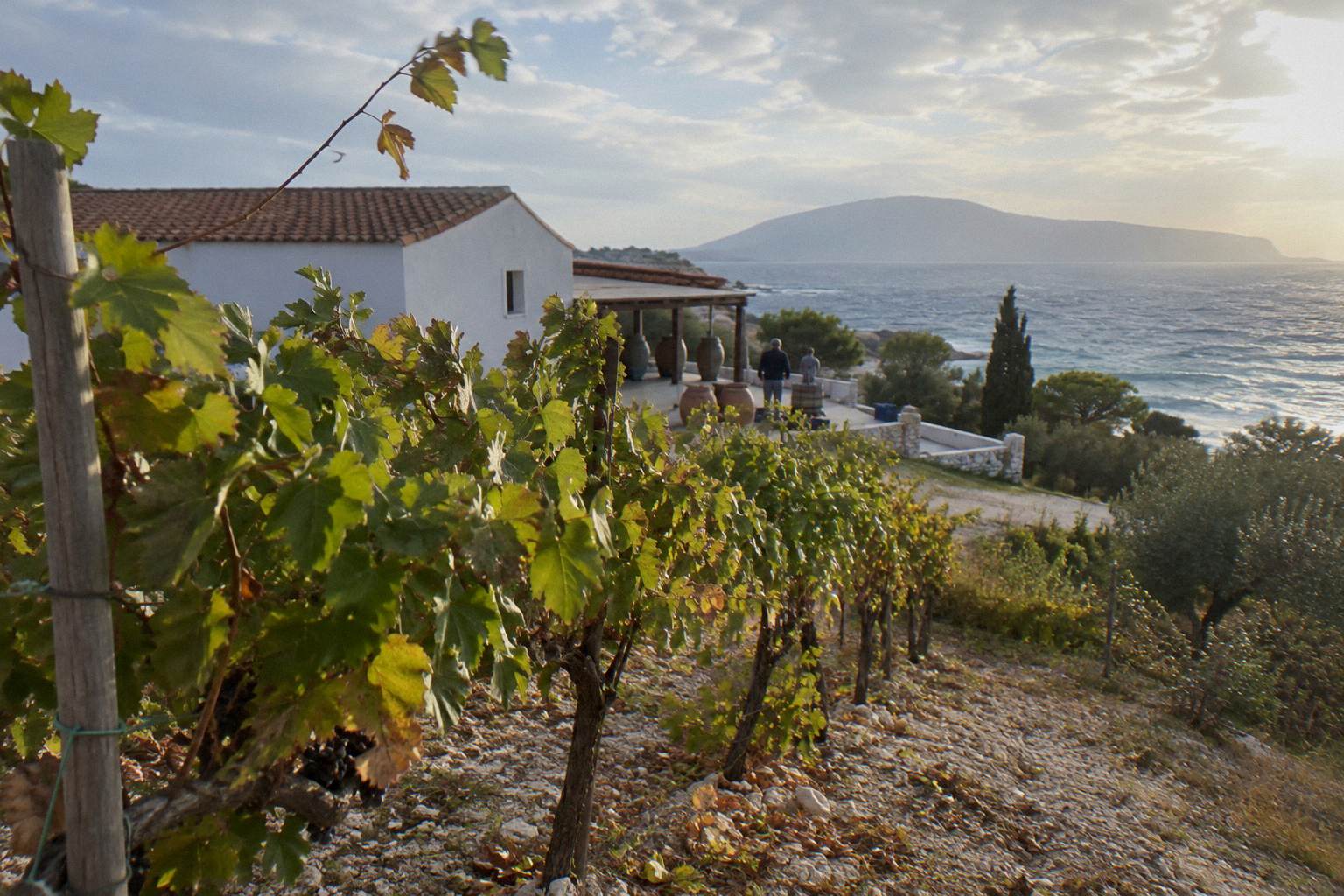
That is the entire wine record we will stand behind, because it is what the verified facts state. The Robola zone covers the communities of Omala, Davgata, Dilinata, Troianata, Faraklata and parts of Moussata and Vlachata, with the Robola Cooperative sitting in the Omala Valley near the Agios Gerasimos monastery since 1982, counting about 300 growers and pouring free tastings on weekdays. The appellation details for the sweet wines are documented by the Greek wine industry's Mavrodaphne of Cephalonia PDO page, which places it in Paliki and Elios-Pronni. Harvest runs September to October, with the Robola festival in late August.
We print no tasting notes here: the record does not describe any of these wines as dry, crisp, full-bodied or anything else, so this page will not either. What matters for a food plan is simpler. The Argostoli food walk pours four different local wines with its snacks. The cooking classes pour house wine with the meal. Several tours pair food with a named Robola tasting, and if you want the wine to lead rather than follow, our guide to Robola, the white wine of Kefalonia covers the winery side in full.
One age note applies across all of it: several listings set a minimum age of 18, and the bike dinner tour is 18 plus, so check the row before booking for teenagers.
What About Honey And Olive Oil?
Honey and olive oil are the island's other two table products, and the tours treat them as tasting items: private and small-group listings visit a bee farm with honey tasting and an olive mill with olive oil tasting, sometimes with wine in the same trip. Kefalonian olive oil holds PGI status limited to the prefecture; the listings serve honey, olive oil and riganada as snacks, with lunch excluded on most.
The farm-side options sit in the private and shore-excursion part of the roster rather than the food-tour hub. A private tour by KEFALONIA TOURS combines a guided bee farm experience with honey tasting, an olive mill visit and a wine stop, from €159 per person for 4 hours 30 minutes, rated 5 across 51 reviews, the largest review pool in that group. A group alternative, Villages, Olive Oil And Honey by Avalon Travel Kefalonia, runs 4 hours from €55 per person, rated 4.3 across 15 reviews, with pickup included and food, drink and castle entry fees excluded. Our guide to olive oil tasting and mill visits in Kefalonia walks through the mill options in more detail.
Two rules for reading those listings. First, extras stay extras: on the private gastronomy tour by Marios Transfers & Tours, the bee farm entry (€5, optional, cash) and the Gentilini tasting (€20, optional, cash) are paid on site, not included. Second, the per-group row exists: one private tour is priced from €400 per group, and that figure is never comparable with the per-person prices around it. For the honey side specifically, see our guide to Kefalonian honey and thyme honey.
How Much Do These Food Experiences Cost?
Prices in this roster run from €25 per person for a 50-minute wine shop tasting up to €160 per person for a private gastronomy day, with the core food experiences clustered between €59 and €145: the Argostoli food walk at €59, the bike food tours at €94 and €105, the meze class at €75, and the cooking classes at €135 and €145. Every figure is a "from" price per person exactly as the listing states it.
Here is the cost picture in one place, with what each price actually buys:
| Experience | Operator | From (per person) | Duration | Food included | Rating (with review count) |
|---|---|---|---|---|---|
| Meze Class At Prickly Pear Farm | Opuntia Kefalonia | €75 | 2 hours | Meze you cook, with house wine, ouzo, tsipouro | 5 across 4 reviews (small pool) |
| Food Tour, Snacks Included | Kefalonia Food Tour | €59 | 2 hours to 2 hours 30 minutes | Pies, riganada, cheeses, sweets, 4 wines | 4.6 across 17 reviews |
| Taste And Bike, Meal Included | Alpha Cycling Holidays | €94 | 3 hours | Meals during the tour, Greek coffee pairing | 4.8 across 9 reviews (small pool) |
| Dine And Bike Tour, Snacks | Alpha Cycling Holidays | €105 | 3 hours 30 minutes | Starter, main, gelato, 2 drinks; e-bike excluded | 5 across 3 reviews (small pool) |
| Cooking Class, Organic Farm Visit | KEFALONIA TOURS | €135 | 3 hours 30 minutes | Lunch, wine and drinks | 5 across 4 reviews (small pool) |
| Greek Cooking Class, Meal Included | Opuntia Kefalonia | €145 | 3 hours 30 minutes | The meal you cook, house wine and water | 5 across 6 reviews (small pool) |
| Private Olive Oil, Honey And Wine | KEFALONIA TOURS | €159 | 4 hours 30 minutes | Honey, olive oil, wine, snacks | 5 across 51 reviews |
Two things stand out from that table. The cheapest way to meet the island's dishes is the €59 walk, and the best-evidenced experience on the page is the private oil, honey and wine tour with its 51-review pool. Every row above carries free cancellation up to 24 hours ahead. If you are still weighing formats, our guide to choosing a food tour in Kefalonia walks through the trade-offs between walks, classes and rides, and our post on whether Kefalonia's food tours are worth the money takes the value question head on.
Whatever you pick, book the format that matches the meal you actually want: snacks across an evening walk, a dinner ride, or a meal you cooked yourself. All three serve the same short, honest list the island has always served.
Common Questions About Kefalonian Food
What Food Is Kefalonia Famous For?
The dishes the island's food experiences actually serve: Kefalonian meat pie, cod pie, riganada, barrel-matured white cheese, candied almonds called mandoles, honey and olive oil, poured over with Robola and the island's sweet PDO wines. No verified source ranks these by fame, so the honest answer is the list itself, not a winner.
What Is Kefalonian Meat Pie Made Of?
Verified food sources describe it as a pastry pie with three meats (pork, goat and veal, or lamb, pork and beef), rice, tomato, onion and spices such as cinnamon and marjoram, sometimes cheese, in olive oil pastry. It is traditionally eaten on Ascension Day. The Argostoli food walk serves it as one of its stops.
Is Riganada A Kefalonian Dish?
It appears on three separate Kefalonia listings, which makes it the most-served item in the roster. Sources describe it as toasted bread or rusks with olive oil, tomato, dried oregano and salt, often with cheese and olives. The record gives no origin story, only the description and the tables it lands on.
Which Tour Serves The Most Kefalonian Dishes In One Go?
The Food Tour, Snacks Included by Kefalonia Food Tour in Argostoli, from €59 per person for 2 hours to 2 hours 30 minutes. It serves cod pie, meat pie, riganada, four local cheeses, mantola and partokidono with four local wines, and is rated 4.6 across 17 reviews.
Can You Cook Kefalonian Food On The Island?
Yes, three listings put you in the kitchen: a 3 hours 30 minutes farm class with tzatziki, Greek salad, lamb chops and filo pie from €145, a 2-hour meze class from €75, and an organic farm class with lunch and wine from €135. All include the meal you prepare.
Do The Food Tours Include Drinks?
Each listing differs and the rows are exact. The Argostoli walk pours four local wines but excludes bottled water, coffee and tea. The cooking classes include house wine. The bike dinner tour includes one drink with the starter and one with the main, while taverna drinks on the lunch ride are extra. Read the inclusions before assuming anything is poured for free.