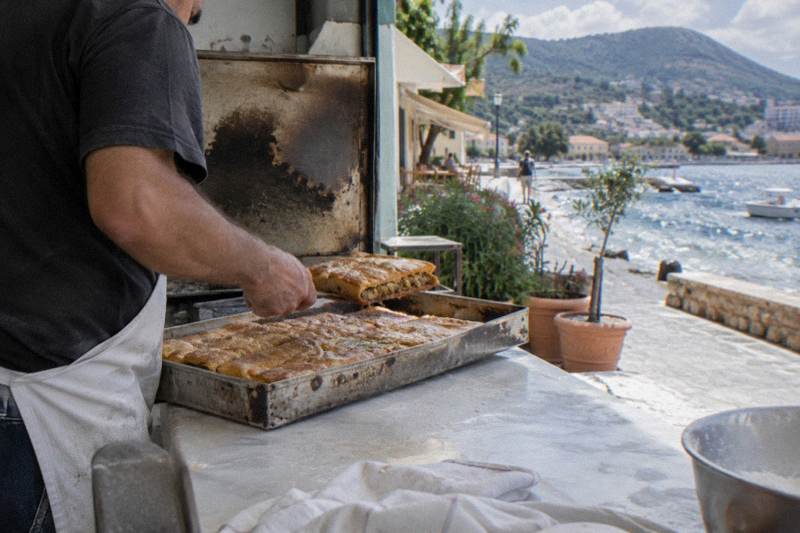
Kefalonian Meat Pie (Kreatopita) And The Island Wine To Drink With It
Kefalonian meat pie is the island's best-known dish. Here is what the record says about it, which tours serve it, and how to build a day around tasting it on Kefalonia.
Short answer
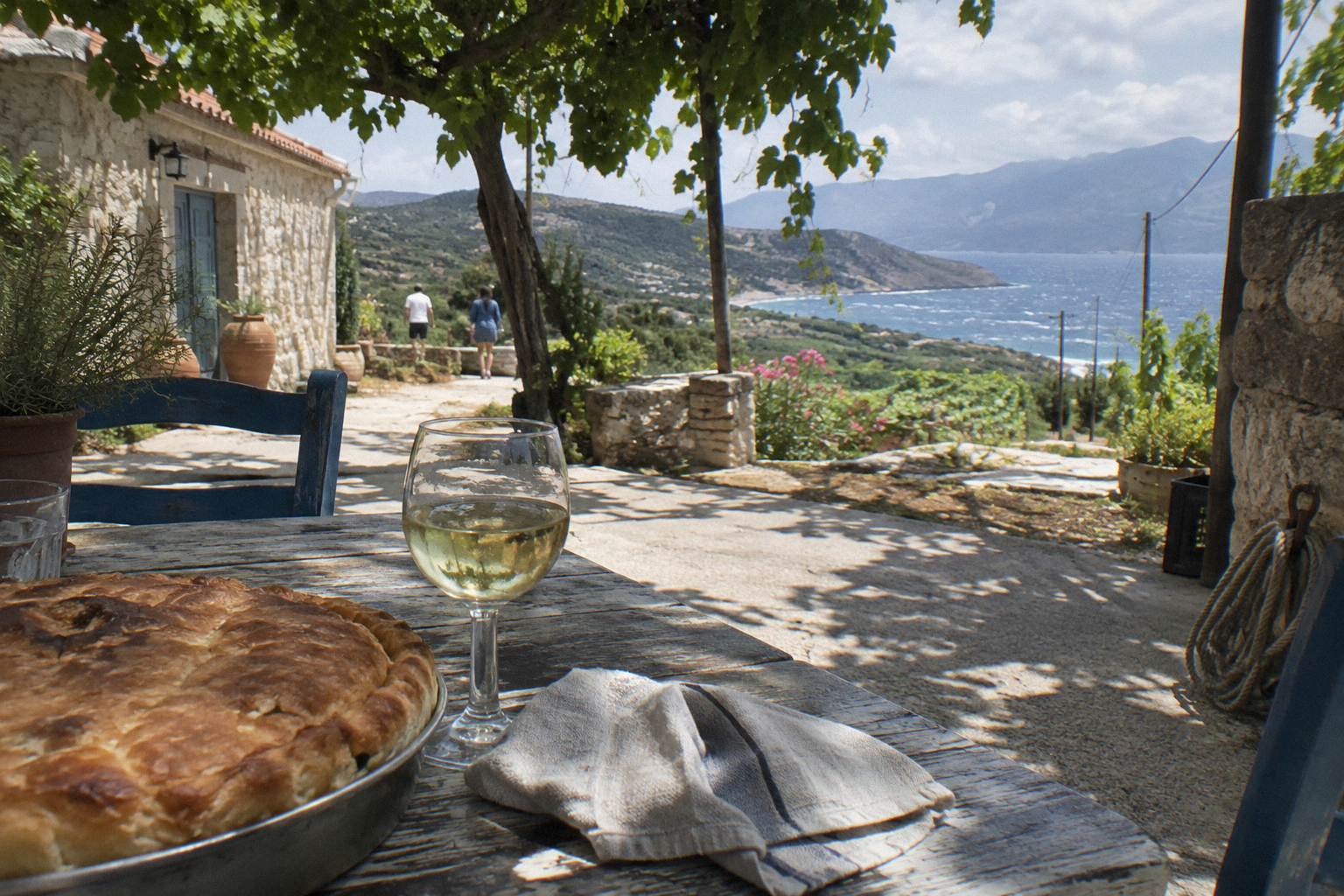
Kreatopita is a Kefalonian pie of three meats, rice, tomato and herbs such as cinnamon and marjoram in an olive oil pastry, traditionally eaten on Ascension Day. No tour row gives a recipe. The Food Tour, Snacks Included by Kefalonia Food Tour lists meat pie among its tastings with 4 local wines, from €59 per person.
Kreatopita, the Kefalonian meat pie, carries three meats in one pan: pork, goat and veal in most tellings, or lamb, pork and beef in others, combined with rice, tomato, onion and warm spices such as cinnamon and marjoram, all wrapped in a homemade pastry made with olive oil. Australian broadcaster SBS documents the recipe in exactly those terms, and Greek food writers add the detail that the pie is traditionally baked for Ascension Day, the feast the island calls Analipsi.
That is the honest edge of the record. There is no verified story of who made it first, which village owns it, or why three meats rather than one. What a visitor can plan around is simpler and more useful: where on Kefalonia you will actually be handed a slice, what the tours that serve it pour alongside it, and which cooking classes let you make pies with your own hands. This guide, from Kefalonia Wine Tasting, sticks to what the listings and the verified facts say, and says plainly wherever the record stops.
What Is Kefalonian Meat Pie And What Goes In It?
Kreatopita is a savoury pie of three meats, most sources naming pork, goat and veal, or lamb, pork and beef, cooked with rice, tomato, onion and spices such as cinnamon and marjoram, sometimes with cheese, inside a homemade olive oil pastry. It is Kefalonia's best-known dish and is traditionally eaten on Ascension Day. The verified record gives no recipe quantities and no origin story.
The structure is the interesting part for a first-time taster. This is not a minced-meat snack pie. The meats are cooked together, the rice swells in the pan juices, and the tomato and onion base carries the spice, which is what gives a slice its warm, sweet-savouring character. Some households add cheese; the sources disagree on that point, and the record does not settle it. The pastry is a homemade one made with olive oil rather than butter, which places it squarely in the tradition of Greek island pies where oil, not dairy fat, does the work of holding the crust together.
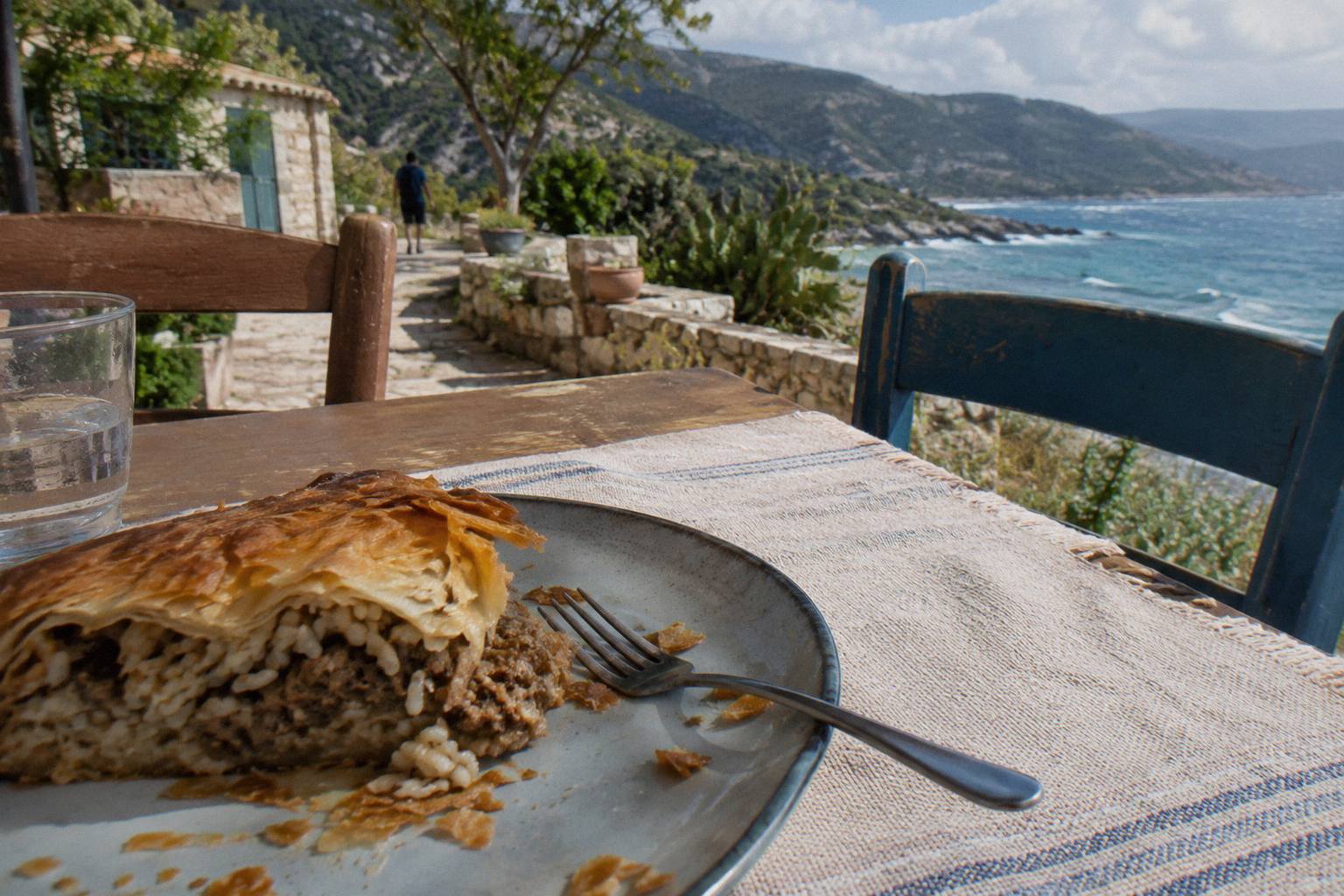
What the record does not contain is equally worth saying plainly. There is no verified history of the dish, no named village of origin, and no documented "oldest" bakery or "first" recipe. Anyone who tells you kreatopita dates from a specific century is guessing. The festival connection is the one solid piece of tradition: the pie belongs to Ascension Day, and if your visit falls in that season you may find it baked in homes across the island rather than only on restaurant menus.
| Element of the dish | What the record says | What stays unverified |
|---|---|---|
| Meats | Three meats; sources name pork, goat and veal, or lamb, pork and beef | Which combination is the "correct" one |
| Filling base | Rice, tomato, onion, herbs and spices such as cinnamon and marjoram | Quantities and proportions |
| Pastry | Homemade, made with olive oil | Whether it is filo or a thicker crust |
| Cheese | Added sometimes, per some sources | Whether it belongs in the traditional version |
| Occasion | Traditionally eaten on Ascension Day (Analipsi) | The dish's origin and history |
For pairing, the record is just as strict. No source states which wine goes with kreatopita as fact. What can be said is which wines the tours pour alongside it: the Argostoli food tour pairs its meat pie stop with 4 local wines, and the island's named PDO wines are Robola, a white from the Omala plateau, plus the sweet Mavrodaphne and Muscat of the Paliki peninsula. Beyond that, taste and decide for yourself. If you want the fuller picture of the island's table, our guide to what to eat in Kefalonia beyond the pie sets out the other dishes the tours list.
Which Kefalonia Tours Actually Serve Meat Pie?
Only one tour row on this site names meat pie in its tastings: the Food Tour, Snacks Included by Kefalonia Food Tour, a shared walking tour of Argostoli food stops from €59 per person, rated 4.6 across 17 reviews, lasting 2 hours to 2 hours 30 minutes, with meat pie, cod pie, riganada, four local cheeses, mandoles and gelato among its tastings.
That listing is the direct answer to the search "where do I try kreatopita on Kefalonia". The tour runs from Argostoli, the island capital, and its listing describes 4 local wines poured alongside the food stops, so it delivers the pie and the island glass in one evening. Free cancellation applies on the listing with a 24 hour window. Bottled water and coffee or tea are listed as exclusions, so those are extras you buy yourself. At two and a half hours at most, it also fits comfortably into a cruise day, since the Argostoli port sits on the central waterfront.
Two other rows mention pies without naming kreatopita specifically, and it would be dishonest to blur them. The Greek Cooking Class, Meal Included by Opuntia Kefalonia lists a filo pie among the dishes you cook and eat, and the 3-Hour Farm Visit And Cooking by SEVEN Sailing & Tourism Services lists pies among its homemade dishes. Neither row says the pie is the three-meat kreatopita, so treat them as pie experiences, not guaranteed meat pie.
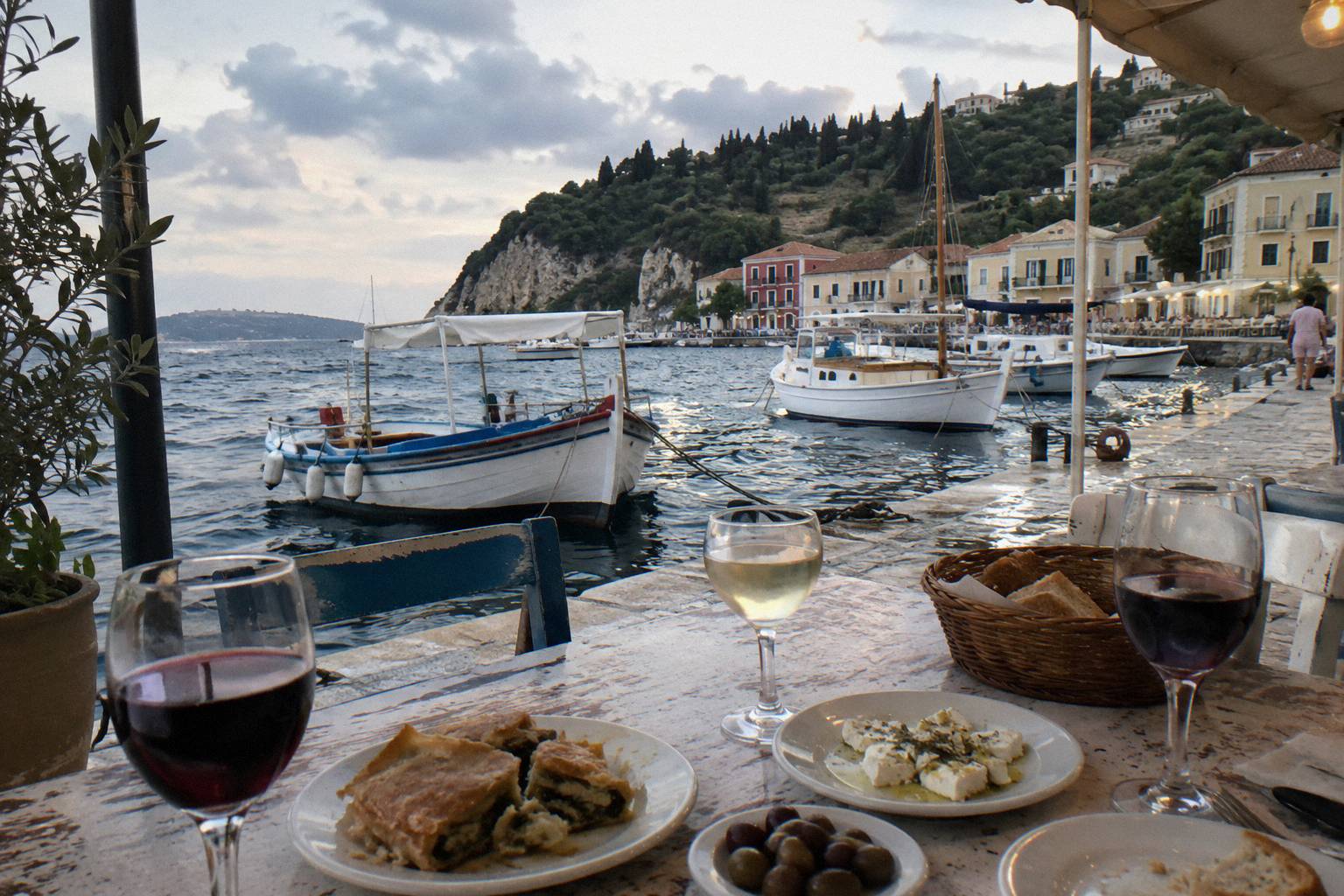
A third option is nearby in spirit rather than on the plate. The Wine Bar Workshop, Snacks by UNEXPLORED KEFALONIA runs 1 hour 30 minutes at Oinos wine bar in the Skala area, from €60 per person, and pours 5 Kefalonian labels including Robola and Mavrodaphne with a structured tasting session led by a wine expert. It is a wine-first evening with snacks rather than a meal, and the listing is explicit that transfers are not included. If meat pie is the goal, the food tour is the row that names it; the workshop is the row that teaches you to taste.
| Tour | Operator | Meat pie named? | Wines listed | From | Duration |
|---|---|---|---|---|---|
| Food Tour, Snacks Included | Kefalonia Food Tour | Yes, in tastings | 4 local wines | €59 per person | 2 to 2.5 hours |
| Greek Cooking Class, Meal Included | Opuntia Kefalonia | No, a filo pie | House wine included | €145 per person | 3.5 hours |
| 3-Hour Farm Visit And Cooking | SEVEN Sailing & Tourism Services | No, pies listed | Drinks listed, no wine count | €130 per person | 3 hours |
| Wine Bar Workshop, Snacks | UNEXPLORED KEFALONIA | No, snacks only | 5 Kefalonian labels | €60 per person | 1.5 hours |
One warning that belongs with the direct answer: no restaurant names appear anywhere in the verified record for this site, so this guide cannot point you to a specific taverna serving kreatopita. The tour rows are the confirmed source of a served slice. You can check the food tour's live listing directly here: Check availability, and read our broader guide to choosing a Kefalonia food tour before committing.
The tasting list on the Food Tour, Snacks Included by Kefalonia Food Tour is worth reading closely, because it tells you what a kreatopita stop sits alongside. Beyond the meat pie itself, the listing names cod pie, so a second savoury pie appears on the same walk, plus riganada, four local cheeses, mandoles and gelato. That spread covers savoury and sweet across the stops, with the four local cheeses and the 4 local wines forming the cheese-and-glass pairing of the evening. The rating of 4.6 across 17 reviews and the from price of €59 per person are the only quality and cost signals in the verified record, and the 24 hour free cancellation window gives some flexibility if a cruise schedule shifts.
Comparing the rows side by side clarifies what each price buys. The Food Tour, Snacks Included by Kefalonia Food Tour is the lowest entry price at €59 per person and the only row that names meat pie. The Greek Cooking Class, Meal Included by Opuntia Kefalonia runs 3.5 hours at €145 per person with house wine included, and its filo pie is cooked by you rather than served to you. The 3-Hour Farm Visit And Cooking by SEVEN Sailing & Tourism Services sits between them at €130 per person for 3 hours, with drinks listed but no wine count given, so the 4 and 5 wine figures on the food tour and workshop rows have no equivalent here. The Wine Bar Workshop, Snacks by UNEXPLORED KEFALONIA costs €60 per person for 1 hour 30 minutes, the shortest duration of the four rows.
The Skala location of the Wine Bar Workshop, Snacks by UNEXPLORED KEFALONIA matters for planning, since the food tour departs from Argostoli and the two experiences are not in the same part of the island. The workshop also states plainly that transfers are not included, so the 5 Kefalonian labels, the wine expert and the structured tasting session are what the €60 per person covers, not travel. For a visitor whose question is specifically where to try kreatopita, the order of the evidence is unchanged: the food tour names it in its tastings, the cooking class and farm visit name pies without specifying which, and the workshop names no pie at all.
Can You Learn To Make Kreatopita In A Cooking Class?
No Kefalonia cooking class row names kreatopita specifically. The closest matches are the Greek Cooking Class, Meal Included by Opuntia Kefalonia, which lists a filo pie, tzatziki, Greek salad and lamb chops with house wine, from €145 per person, rated 5 across 6 reviews, and the island's other farm and meze classes, which list pies among their dishes.
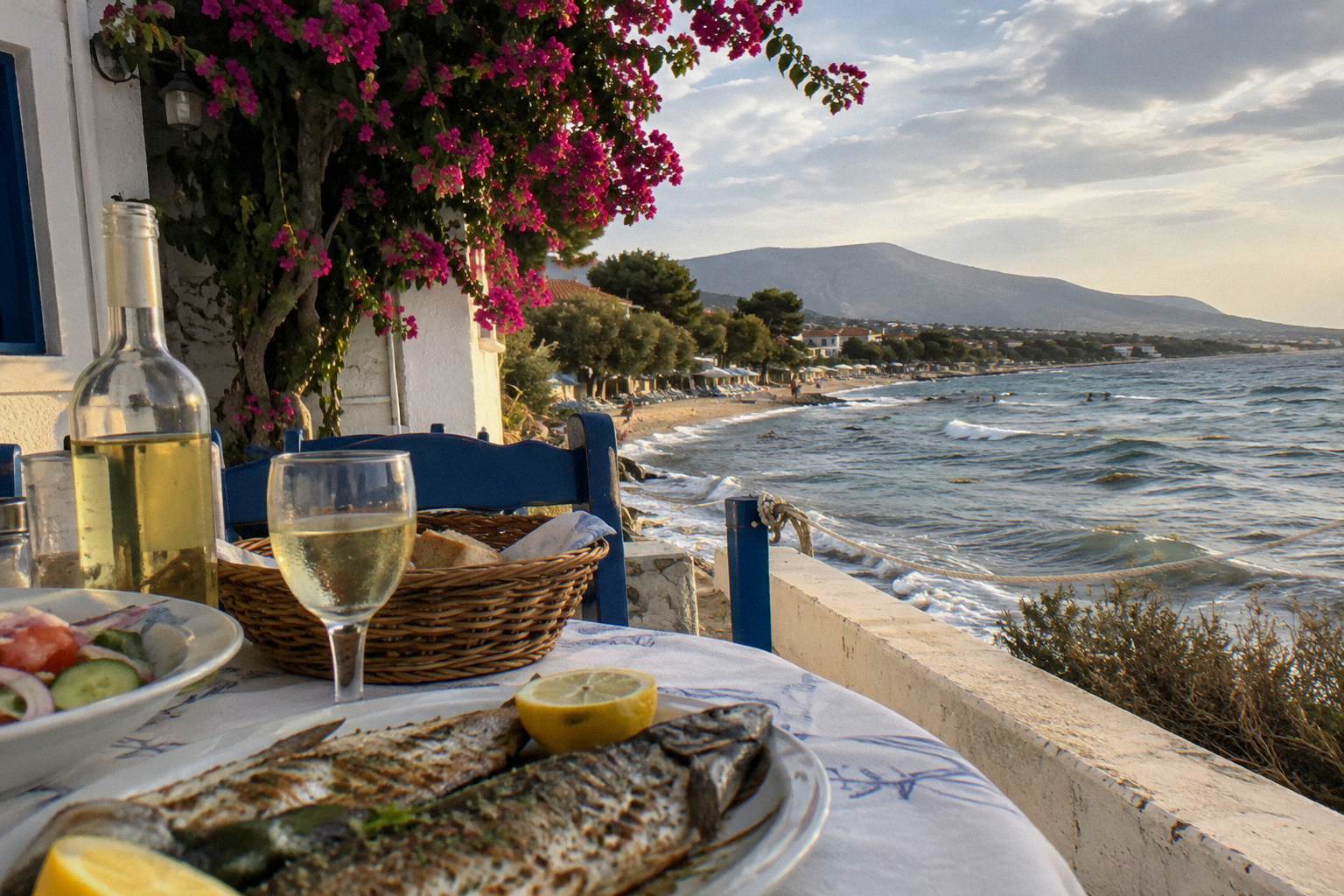
The Greek Cooking Class is the strongest candidate for anyone who wants pie-making in the mix. It runs 3 hours 30 minutes as a shared class at a farm, house wine and water are included, and the small review pool is worth stating plainly: 5 across 6 reviews is a good score from very few people. Free cancellation applies with a 24 hour window. The class list reads like a full Kefalonian table, with the filo pie as the closest thing to the dish this page is about.
The Cooking Class, Organic Farm Visit by KEFALONIA TOURS takes a different angle: riganada, tzatziki and other meze cooked after a farm tour, with lunch, wine and drinks included, in a small group capped at 12 people. It runs 3 hours 30 minutes from €135 per person and is rated 5 across 4 reviews, again a small pool. Semi-private transportation is listed as included, which matters if you are staying outside Argostoli and would rather not drive on a day that includes wine.
The Meze Class At Prickly Pear Farm, also by Opuntia Kefalonia, is the shortest option at 2 hours, from €75 per person, rated 5 across 4 reviews, with house wine, ouzo and tsipouro included. It covers meze rather than a full meal, and the operator's listing notes it serves no preservative-heavy refreshments, a stance that tells you something about the farm's ethos. There is also the 3-Hour Farm Visit And Cooking by SEVEN Sailing & Tourism Services at €130 per person, which lists yogurt dips, pies, vegetables and herbs among its homemade dishes, with drop-off and pickup from your accommodation included.
| Class | From | Duration | Rating | Drinks included | Age note |
|---|---|---|---|---|---|
| Greek Cooking Class, Meal Included | €145 per person | 3.5 hours | 5 across 6 reviews | House wine and water | None on the row |
| Cooking Class, Organic Farm Visit | €135 per person | 3.5 hours | 5 across 4 reviews | Wine and drinks with lunch | None on the row |
| Meze Class At Prickly Pear Farm | €75 per person | 2 hours | 5 across 4 reviews | House wine, ouzo, tsipouro | None on the row |
| 3-Hour Farm Visit And Cooking | €130 per person | 3 hours | No rating on the row | Soda and water | None on the row |
Which Island Wines Do The Tours Pour With Food?
The verified record names no wine pairing for kreatopita. What it does name is what the tours pour: the Argostoli food tour serves 4 local wines with its tastings, the island's PDO wines are Robola, Mavrodaphne of Cephalonia and Muscat of Cephalonia, and no source states which of them goes with the pie as fact.
Start with what is documented. Robola of Cephalonia is a PDO wine made from 100 percent Robola grapes, registered in 1981, grown on the Omala plateau and the slopes of Mount Ainos across the communities of Omala, Davgata, Dilinata, Troianata, Faraklata and parts of Moussata and Vlachata, at altitudes of roughly 175 to 800 metres, as recorded in the EU's published PDO specification. Mavrodaphne of Cephalonia is a sweet red fortified wine from western Cephalonia including the Paliki peninsula, and Muscat of Cephalonia is a sweet white also from Paliki, both documented by Wines of Greece. The Robola Cooperative in the Omala Valley, founded in 1982 with about 300 growers, sits near the Agios Gerasimos monastery and offers free tastings, which makes it the easiest standalone winery stop to add to a food day.
Only one tour listed here names meat pie among its tastings
| Tour | Meat Pie? | Wines | From | Duration |
|---|---|---|---|---|
| Food Tour, Snacks Included | Yes, in tastings | 4 local wines | €59 per person | 2 to 2.5 hours |
| Greek Cooking Class, Meal Included | No, a filo pie | House wine included | €145 per person | 3.5 hours |
| 3-Hour Farm Visit And Cooking | No, pies listed | No wine count | €130 per person | 3 hours |
| Wine Bar Workshop, Snacks | No, snacks only | 5 Kefalonian labels | €60 per person | 1.5 hours |
The record stops at names and places. It contains no tasting notes: nothing about whether Robola is crisp or full-bodied, nothing about citrus or minerality, and this guide will not manufacture any. Taste the wines on a tour and form your own view of what suits the pie. Our explanation of Greek island wines and grapes covers the wider context without inventing descriptions, and the dedicated guide to Robola wine of Kefalonia goes deeper on the island's flagship white.
The one structured tasting that teaches technique is the Wine Bar Workshop by UNEXPLORED KEFALONIA mentioned earlier: 5 Kefalonian labels, tasting mats and notes per participant, and step-by-step training in professional tasting technique, 18 and over, from €60 per person. Pairing decisions made after that 90 minutes will at least be informed ones.
What Else Will Be On The Plate Beside The Pie?
The Argostoli food tour lists cod pie, riganada, four local cheese varieties, the sweets called mandoles and gelato alongside its meat pie and 4 local wines. Riganada is toasted bread with olive oil, tomato, dried oregano and salt, often with cheese and olives, and mandoles are roasted almonds coated in hard caramel.
Riganada is the island's simplest dish and the one you will see most often. TasteAtlas describes it as toasted bread or rusks drizzled with olive oil and topped with tomato, oregano and salt, frequently finished with cheese and olives. It appears on several tour rows, including both Alpha Cycling Holidays food rides, so it functions as the island's default opener, the dish a host puts down first.
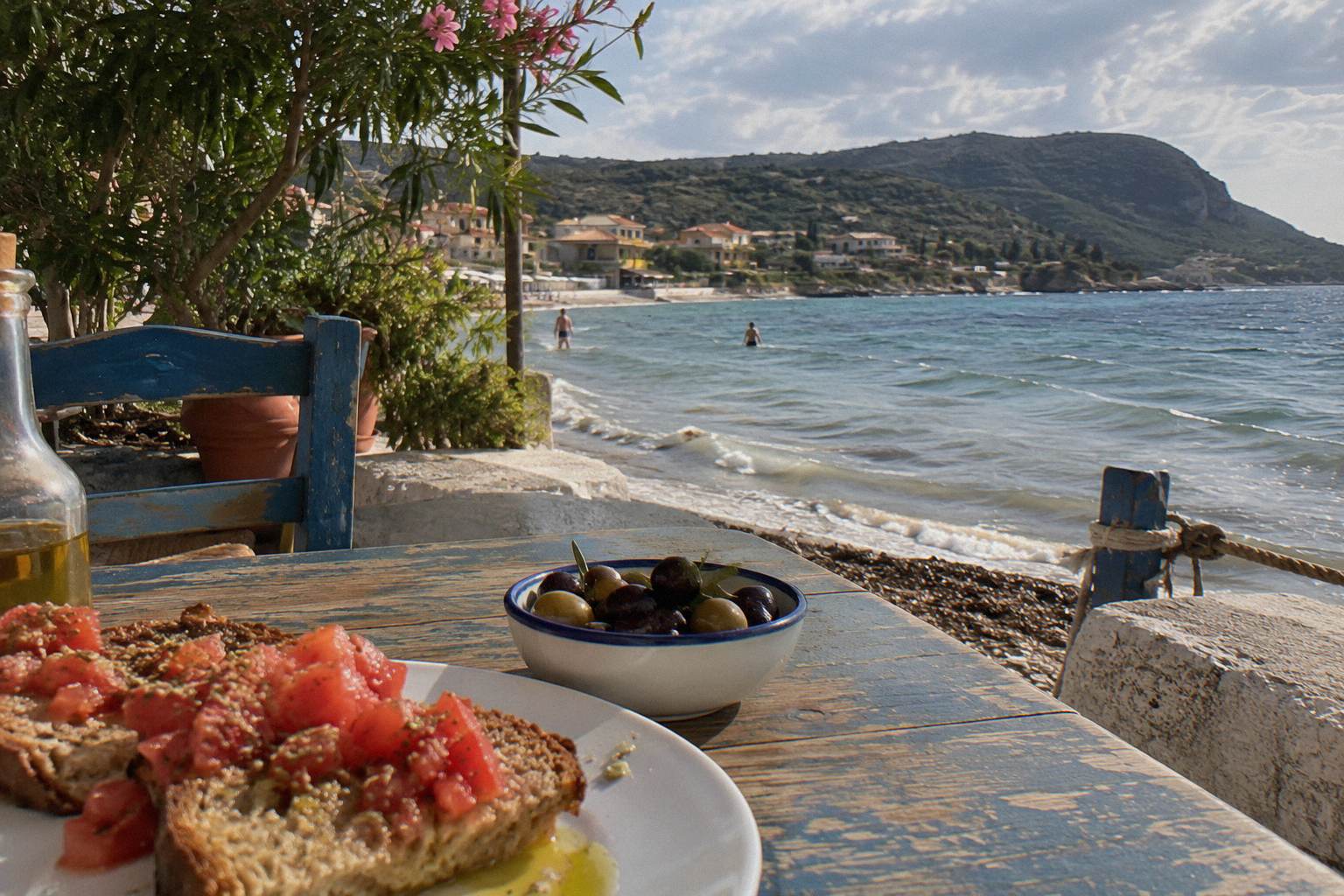
The cheese on the food tour is its own story. Kefalonian white brined cheese, made from sheep and goat milk and matured in barrels, is locally called feta but sits outside the feta PDO, and a local graviera is made too. Mandoles, the candied almonds often coloured red, are the classic sweet, and the food tour lists them among its tastings. For the deeper dish-by-dish rundown, see our guide to Kefalonia's local food.
Beyond pie, two cycling options add movement to the meal. The Taste And Bike, Meal Included by Alpha Cycling Holidays runs 3 hours from €94 per person, rated 4.8 across 9 reviews, with meals provided during the tour and a Dutch or English speaking guide; an e-bike upgrade costs €20 extra and taverna drinks are excluded. The Dine And Bike Tour, Snacks, also by Alpha Cycling Holidays, runs 3 hours 30 minutes from €105 per person, rated 5 across 3 reviews, 18 and over, moving through starter, main and dessert stops with riganada, saganaki, grilled vegetables and a two-scoop gelato, one drink with the starter and one with the main. Neither row names meat pie, so book them for the ride and the spread, not the kreatopita.
When Should You Plan A Kreatopita And Wine Day?
The grape harvest runs September to October and the Robola festival falls in late August, so late summer and early autumn concentrate the island's food and wine calendar. The meat pie's traditional day is Ascension Day in spring. Tour rows mostly offer free cancellation with a 24 hour window, so book ahead and keep flexibility.
Timing works on two levels here. The dish itself belongs to Ascension Day, a movable feast in spring, so a visit in that season offers the best chance of encountering kreatopita as a living tradition rather than a menu item. The wine calendar pulls the other way: harvest is September to October, and the Robola festival in late August sits just before it, as Discover Greece documents. A September visit catches both the tail of the harvest mood and reliably warm touring weather.
Practical planning points from the record: the Argostoli cruise port sits on the central waterfront, with ships docking at the pier or tendering to the central harbour depending on the ship and traffic, so the food tour's Argostoli base is walkable from a cruise day. Greece serves and sells alcohol from age 18, and several wine-focused rows on this site set 18 as their minimum, so check the age line before booking for teenagers. For the seasonal question in full, our blog post on the best time of year for winery visits goes deeper.
One last caution that belongs in any Greek wine day: the drink-drive limit is very low, and the rule from the record is simple, do not drive after tasting. Book a tour with transport, or plan the day on foot in Argostoli where the food tour, the wine shop tasting and the harbor are all close together.
Does The Pie Travel, And What About Other Island Dishes?
You cannot take a baked kreatopita home in any practical sense, and the record gives no airline or customs rules for carrying food, oil or wine, so this guide prints none. What you can take home is the knowledge from a cooking class, and the island's other documented dishes, bourbourelia, aliada and more, are covered elsewhere on this site.
The honest answer on souvenirs is short. The verified record for this site contains no customs allowances, no airline liquid rules and no packaging advice, and rather than fill the gap with plausible-sounding numbers, this page points you to the official sources for your own country before you pack. What the record does support is the cooking class route: learning the pie in a Kefalonian farm kitchen is the version of the dish that actually travels, because it goes home in your head rather than in your luggage.
The island table extends well past the pie. Bourbourelia, a traditional mix of pulses and grains such as chickpeas, white beans, lentils, broad beans, corn, barley or wheat, soaked overnight and simmered with onion and salt and served with olive oil and lemon, has its own festival at Poros around 21 November; the blog post on what bourbourelia is explains the dish and its feast day. Aliada, the local garlic and potato sauce often served with fried salt cod and greens, rounds out the shortened list of documented dishes, and everything else on this site is labelled clearly where the record ends.
| Documented dish | What it is | Where it appears on this site |
|---|---|---|
| Kreatopita (meat pie) | Three meats, rice, tomato and spices in olive oil pastry | The Argostoli food tour tastings |
| Riganada | Toasted bread with olive oil, tomato, oregano, often cheese and olives | Food tour and both cycling food tours |
| Mandoles | Roasted almonds coated in hard sugar caramel | Food tour tastings |
| Bourbourelia | Mixed pulses and grains with olive oil and lemon | Festival dish, Poros, around 21 November |
| Aliada | Garlic and potato sauce with lemon or vinegar | Served with fried salt cod and greens |
The practical route for most visitors: one evening on the Argostoli food tour for the pie and the 4 local wines, one morning or afternoon in a cooking class if you want your hands in the pastry, and the wine bar workshop if tasting technique is the goal. Three bookings, one honest plan, and every price and rating above comes straight from the live listings.
Common Questions About Kefalonian Meat Pie
What Is Kefalonian Meat Pie?
It is a savoury pie of three meats, most sources naming pork, goat and veal or lamb, pork and beef, cooked with rice, tomato, onion and spices such as cinnamon and marjoram in a homemade olive oil pastry. It is traditionally eaten on Ascension Day and is the island's best-known dish.
Where Can I Try Kreatopita On Kefalonia?
The Food Tour, Snacks Included by Kefalonia Food Tour lists meat pie among its Argostoli tastings, served with 4 local wines, from €59 per person. No restaurant names appear in the verified record, so the tour is the confirmed source of a served slice.
Which Wine Goes With Kefalonian Meat Pie?
No source states a pairing as fact. The tours pour 4 local wines with the food tour's meat pie stop, and the island's PDO wines are Robola, Mavrodaphne of Cephalonia and Muscat of Cephalonia. Taste and decide for yourself.
Can I Learn To Make Kreatopita In A Class?
No class row names kreatopita specifically. The Greek Cooking Class, Meal Included by Opuntia Kefalonia lists a filo pie among its dishes from €145 per person, and two other classes list pies among their homemade dishes.
When Is Kreatopita Traditionally Eaten?
On Ascension Day, the feast known locally as Analipsi, a movable date in spring. Outside that day it appears on menus and tour tastings without the festival connection.
Is There A Recipe In The Record?
No. The verified sources describe the ingredients and the festival occasion but give no quantities, no origin story and no documented first maker, and this guide prints nothing beyond them.