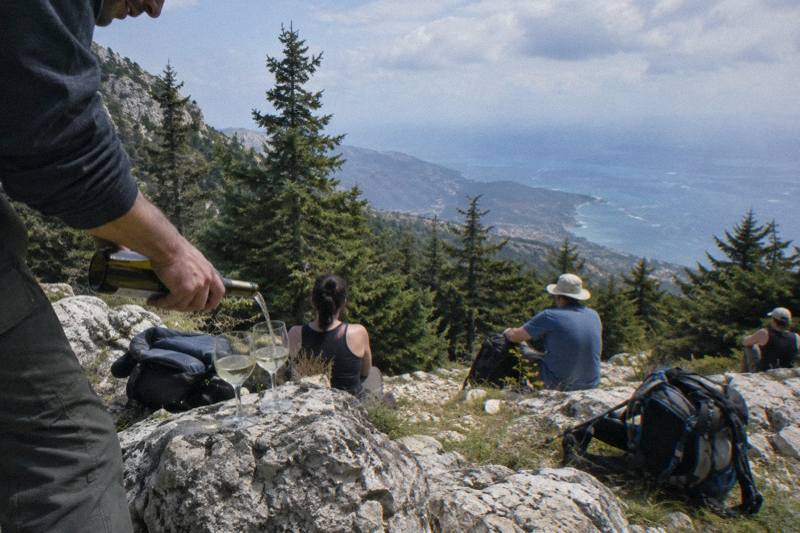
Robola Of Cephalonia PDO: Omala Valley And Mount Ainos Terroir
The Robola of Cephalonia PDO is not a marketing label. It is a legally defined zone on the slopes of Mount Ainos, built around the Omala plateau, and it has been registered since 1981.
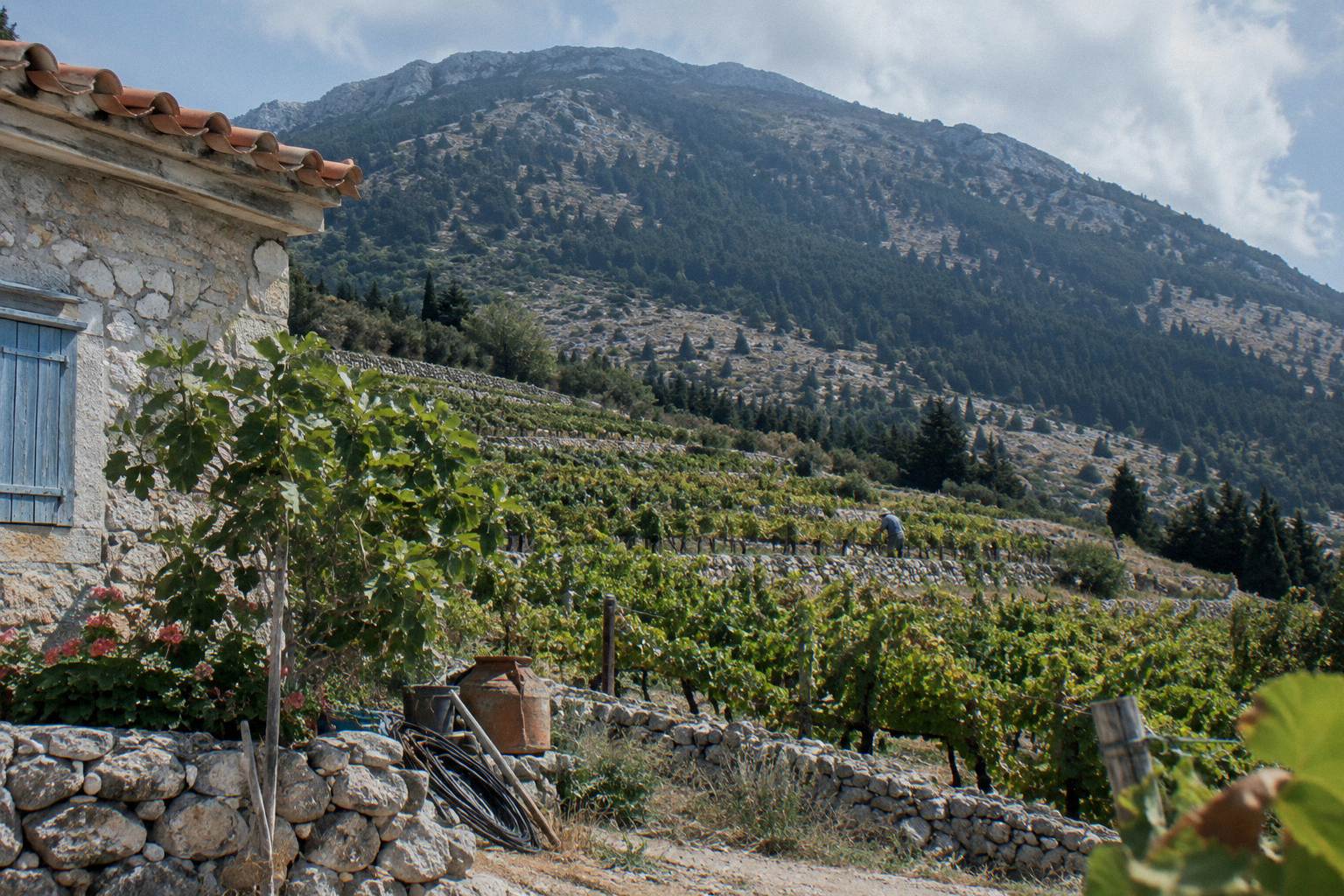
Short answer
The Robola of Cephalonia PDO covers the Mount Ainos area on the Omala plateau, across seven named communities, at altitudes of roughly 175 to 800 metres. The wine must be 100 percent Robola, the PDO was registered in 1981, and the Robola Cooperative in the Omala Valley, founded in 1982 with about 300 growers, pours free weekday tastings.
The Robola of Cephalonia PDO is one of the oldest registered wine appellations on the island, and its boundaries are written down, not imagined. The zone sits on the slopes of Mount Ainos, known in older texts as Enos, centred on the Omala plateau, and every bottle that carries the label has to come from inside those lines and be made from 100 percent Robola. That single fact, the grape and the place locked together by law since 1981, is what separates Robola of Cephalonia from the looser "Greek island white" category it often gets filed under.
The distinction has a practical edge for visitors. Wine regions that exist only in brochures tend to dissolve the moment you try to visit them; a PDO zone with published boundaries gives you something you can stand in. On Kefalonia that means a compact highland area you can cross in an afternoon, anchored by a growers' cooperative that has been pouring its members' wine since 1982, and by a monastery that predates the appellation by centuries. The two sit within sight of each other, which tells you most of what you need to know about how the island arranges its wine landscape.
This guide walks the zone itself: which communities it covers, the altitudes it spans, how the Robola Cooperative in the Omala Valley organises about 300 growers, when harvest falls, and which of the island's tours actually put you on that ground. For what the wine tastes like and how to taste it, the consumer guide to Robola wine of Kefalonia covers that side. This page is about the map.
What Is The Robola Of Cephalonia PDO Zone?
The Robola of Cephalonia PDO is the legally defined area on the slopes of Mount Ainos, centred on the Omala plateau, covering the communities of Omala, Davgata, Dilinata, Troianata, Faraklata and parts of Moussata and Vlachata, at altitudes of roughly 175 to 800 metres. The wine must be made from 100 percent Robola, and the PDO was registered in 1981.
The zone's boundaries are published in the European Union's official register, which places Robola of Cephalonia firmly in the Mount Ainos (Enos) area rather than spreading it across the whole island (the EU's published PDO specification). That matters for a visitor. An island-wide appellation would give you dozens of places to taste; a compact highland zone gives you one concentrated area, the Omala plateau and its neighbouring villages, where nearly everything worth seeing on the Robola side of the island sits within a short drive.
The Greek appellation body summarises the rule plainly: Robola of Cephalonia must be 100 percent Robola, with no blending permitted under the PDO (the official PDO page for Robola). Greece has 34 PDO wine locations in total, and Kefalonia holds three of them, which is a remarkable density for a single Ionian island. Robola is the one tied to the mountain.
Why does the 100 percent rule matter when you are standing in a tasting room? Because it removes ambiguity from the label. A bottle marked Robola of Cephalonia cannot be a blend dressed up with a famous name; by law it is the single grape, from the single zone. For a traveller doing a quick comparison of island whites, that is one variable you do not have to interrogate. The remaining questions, which producer and which vintage, are the ones a tasting visit answers.
A note on what this page will not do. The verified record for this site covers the zone, the altitude range, the registration, the cooperative and the calendar. It does not cover soil, climate, or why the grape behaves as it does on these slopes, so those explanations stay out. Where the record stops, we say so.
Where Is The Omala Valley Wine Zone On The Map?
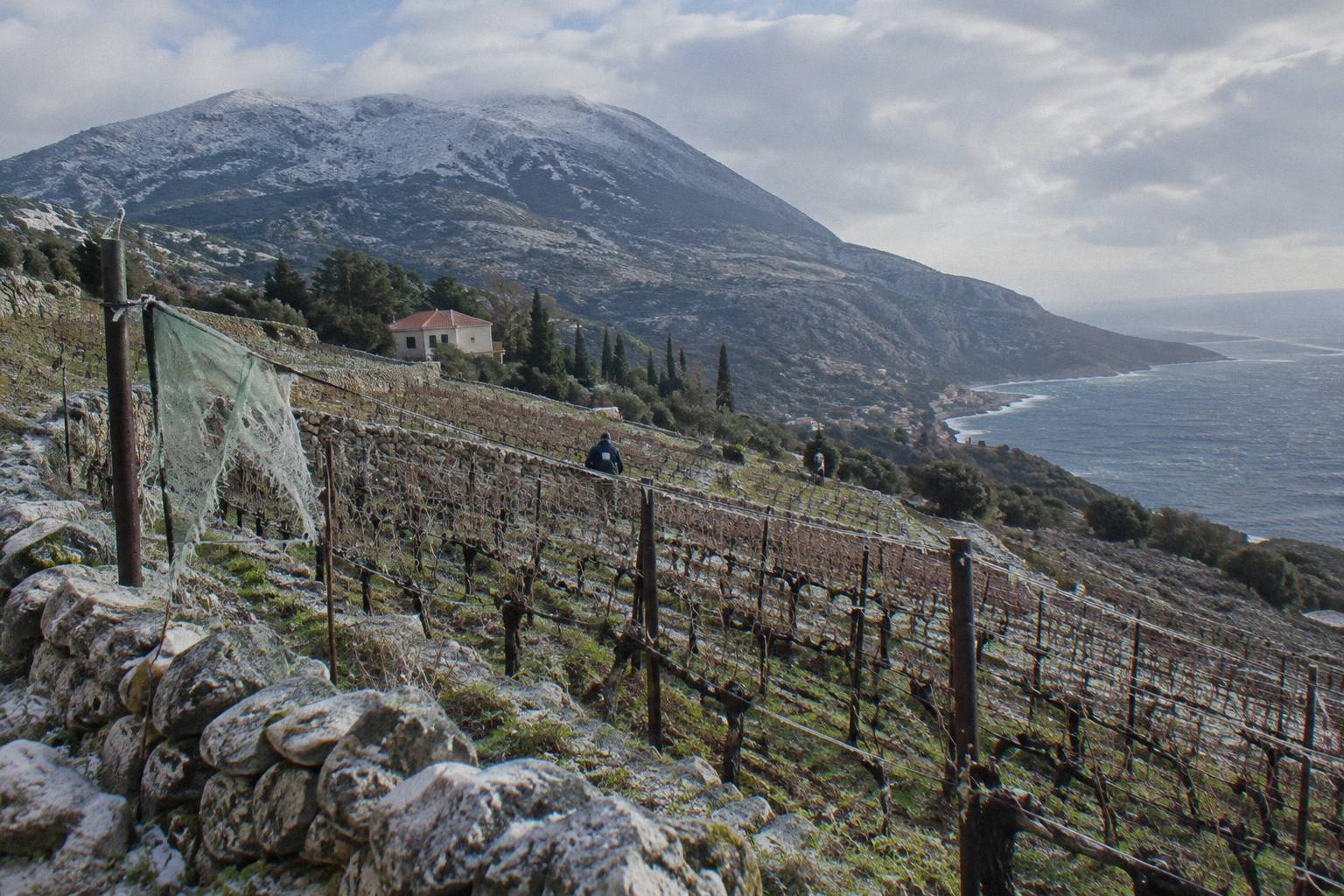
Omala is a plateau village on the flank of Mount Ainos, roughly central-south in Kefalonia, next to the Agios Gerasimos monastery. The PDO spreads out from it across Davgata, Dilinata, Troianata, Faraklata and parts of Moussata and Vlachata, with vineyard altitudes from about 175 to 800 metres. The Robola Cooperative sits at about 410 metres.
If you look at Kefalonia as a whole, the zone hugs the mountain's northwest shoulder rather than the coast. Argostoli, the capital, sits on its own peninsula to the west, and the drive inland to Omala takes you away from the water and up towards the tree line of the Ainos national park. The monastery of Agios Gerasimos, the island's patron saint, stands just beside the cooperative, so most visits to the zone combine the two without any extra planning.
| Community in the PDO zone | Where it sits | Altitude band of the zone |
|---|---|---|
| Omala | Plateau village, site of the Robola Cooperative near Agios Gerasimos | Zone runs from about 175 m |
| Davgata | Village on the northern edge of the zone | Within the 175 to 800 m band |
| Dilinata | Village north of Omala towards the Ainos foothills | Within the 175 to 800 m band |
| Troianata | Village south of Omala | Within the 175 to 800 m band |
| Faraklata | Village on the western side of the zone | Within the 175 to 800 m band |
| Moussata (part) | Only part of the community lies inside the zone | Within the 175 to 800 m band |
| Vlachata (part) | Only part of the community lies inside the zone | Up to about 800 m |
The cooperative is the practical heart of the zone for a visitor. It was founded in 1982, one year after the PDO registration, and today gathers about 300 growers who deliver their Robola fruit to the shared winery in the Omala Valley (the island tourism body's page on the cooperative). It offers free tastings on weekdays, with longer opening hours from May to October. Check the current schedule on the day you plan to go, because hours shift between seasons.
The cooperative model explains something a first-time visitor often finds puzzling: why one winery name dominates the Robola shelves. With about 300 growers feeding a single winery, the cooperative is the largest single route to market for the zone's fruit, and its tasting room is where a casual visitor can sample the appellation's output without an appointment elsewhere. The trade-off is scale: a cooperative tasting is a broad survey of the zone, not a conversation with one family about one vineyard. Both experiences exist on this island, and the estate guide below covers the second kind.
Beyond the cooperative, tourism sources list Gentilini, Sclavos, Haritatos and Petrakopoulos as wineries open to visitors on the island. The record confirms they welcome visitors and stops there: no hours, prices or tasting formats are carried here, so confirm each directly. Our guide to Kefalonia wineries and estates to visit walks the wider island.
Which Tours Actually Visit The Omala Valley?
Four listings here touch the zone. The Mt Ainos Hike And Wine Tasting tour (from €135 per person) pairs an easy hike, St Gerasimos monastery and an Omala Valley shop with optional wine and lunch. The Fully Customizable Private Tour (from €60 per person) includes an Omala Valley tasting of wine, olive oil and honey. The Castle And Monasteries Combo (from €150) visits Agios Gerasimos and Orealios Gaea. The Island Bus Tour (from €40) stops at the Robola Winery.
Start with the one built around the mountain. The Mt Ainos Hike And Wine Tasting tour, run by KEFALONIA TOURS, lasts 5 hours as a whole-tour length and is a private-group format with pickup included. The route takes in an easy hike on Mount Ainos, the St Gerasimos monastery, and a stop at an Omala Valley shop selling honey, olives and wine, with wine and lunch optional extras. That last point matters: the wine and the lunch are optional on this tour, so budget for them separately rather than reading the headline price as all-in. It carries no printed rating. Read the full Mt Ainos tour page for the live listing.
The flexible option goes further inland for less. The Fully Customizable Private Tour, also from KEFALONIA TOURS, runs between 5 and 10 hours depending on the itinerary you agree, costs from €60 per person, and its listed inclusions name a wine, olive oil and honey tasting in the Omala Valley, private transportation, an English-speaking driver and an island map. It is rated 5 across 7 reviews, a small number of reviews, so read the score with that pool in mind. Lunch is excluded. Because the itinerary is customisable, this is the row to choose if the zone itself is the priority rather than a fixed circuit of the island's headline sights; you decide how long Omala gets. The rest of the planning pages sit on Kefalonia Wine Tasting.
The budget route reaches the zone by bus. The Island Bus Tour with wine tasting, Melissani and Fiscardo, run by Kefalonia Excursions, costs from €40 per person, runs 8 hours, and stops at the Robola Winery, Agios Gerasimos Monastery, Drogarati Cave, Melissani and Fiscardo, with hotel or nearest-meeting-point pickup and an English-speaking guide included. It is rated 4.8 across 395 reviews, the second-largest review pool on this site. Entrance fees for Melissani and Drogarati are excluded, as is food and drink. At that price the winery stop is one element of a full island loop rather than the focus, but for many visitors it is the only realistic way to see the zone, the caves and Fiscardo in a single day.
| Tour | Operator | Price | Duration | What it does in the zone | Rating |
|---|---|---|---|---|---|
| Mt Ainos Hike And Wine Tasting | KEFALONIA TOURS | from €135 per person | 5 hours | Easy hike, monastery, Omala Valley shop; wine and lunch optional | none printed |
| Fully Customizable Private Tour | KEFALONIA TOURS | from €60 per person | 5 to 10 hours | Wine, olive oil and honey tasting in Omala Valley included | 5.0 from 7 reviews |
| Castle And Monasteries Combo | Thalassa tours transfers kefalonia | from €150 per person | 5.5 hours | Agios Gerasimos, Orealios Gaea Robola growers | none printed |
| Island Bus Tour, 8 Hours | Kefalonia Excursions | from €40 per person | 8 hours | Robola Winery tasting stop plus caves and Fiscardo | 4.8 from 395 reviews |
The Castle And Monasteries Combo, run by Thalassa tours transfers kefalonia, is the deepest dip into the zone's producers. Over 5.5 hours in a van capped at 8 participants, it visits St George Castle, the Agios Gerasimos monastery, Orealios Gaea, which the listing names as Robola growers, the Vassilakis Distillery-Winery, and Liocharis Olive Oil, starting from Thalassa Properties. It costs from €150 per person, prints no rating, and carries free cancellation with a 24 hour window. It is the only listing on this site that names Orealios Gaea, so if the Robola growers themselves are your interest, this is the row to read. The small van cap is a real difference from the shared bus options: eight seats versus a coach changes the pace of every stop, particularly at the monastery and the growers' premises.
Before booking any of the four, it helps to know what sits behind the Robola name on these listings. Robola of Cephalonia is a PDO wine, and the Omala Valley is the zone where the growers on these tours are based. None of the tours on this page advertises a visit inside a working cellar, so treat the winery and shop stops as tasting and retail stops unless the individual listing says otherwise.
Two practical differences between the listings are worth weighing if the valley is the point of your day. Only two of the four tours put a named Omala Valley tasting in the inclusions: the Fully Customizable Private Tour from KEFALONIA TOURS lists wine, olive oil and honey, while the Mt Ainos Hike And Wine Tasting from the same operator makes the wine an optional extra at a valley shop. The Island Bus Tour from Kefalonia Excursions reaches the Robola Winery but excludes food and drink, and the Castle And Monasteries Combo from Thalassa tours transfers kefalonia pairs the growers with a distillery-winery and an olive oil producer but prints no rating, so there is no review pool to check before you commit €150. Durations also spread widely for a zone visit: from 5 hours on the hike option up to 10 hours on the customisable private tour, which is the one listing where time in Omala is set by the itinerary you agree rather than a fixed schedule.
When Is Robola Harvested And When Is The Festival?
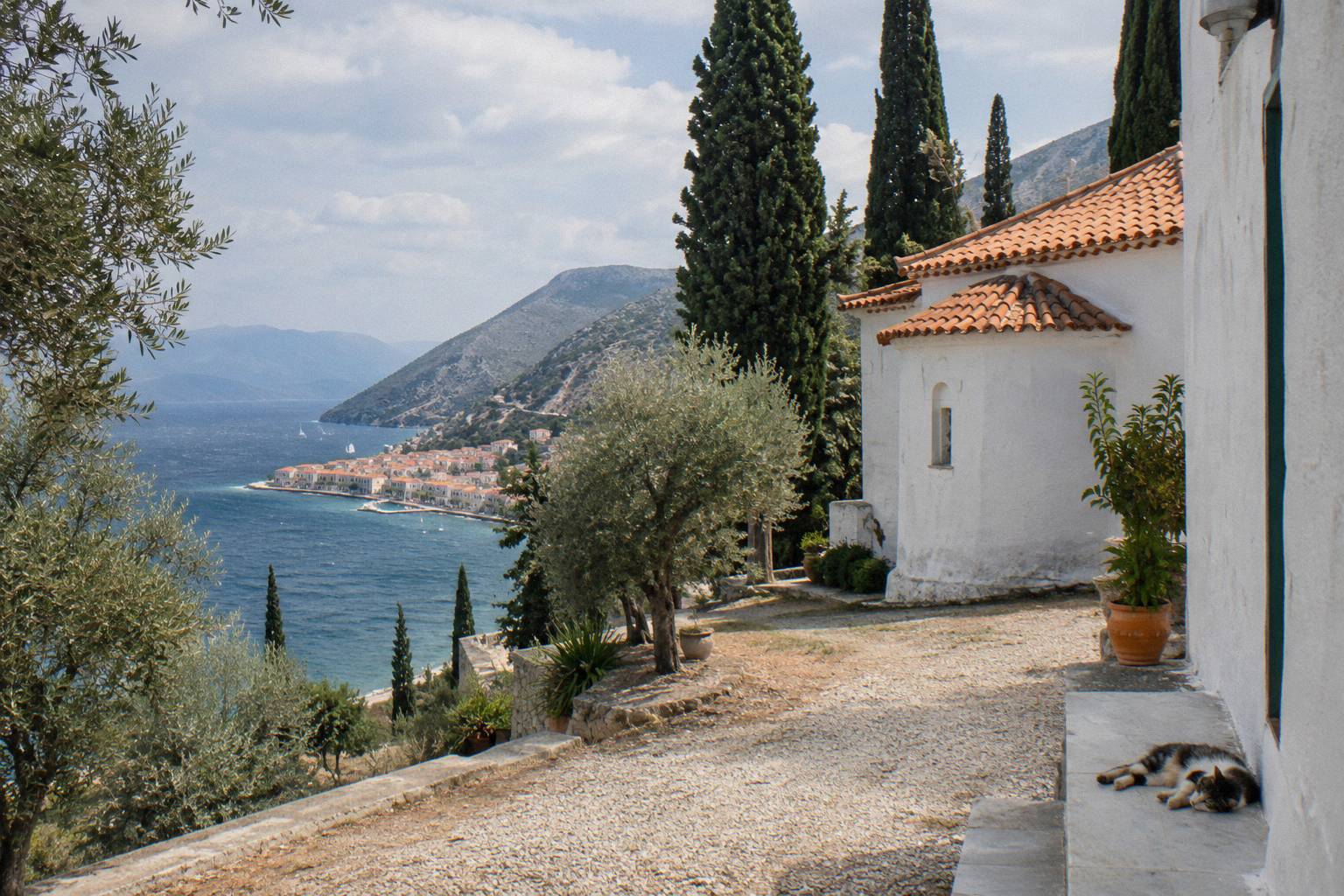
Harvest across the Robola zone runs from September to October, and the Robola festival is held in late August, just before picking begins. That makes late August and September the most atmospheric weeks to visit the Omala Valley, and May to October the window with the cooperative's longer opening hours.
The calendar is the one part of the zone's rhythm that a visitor can genuinely plan around (Discover Greece's Kefalonia wine page confirms both the harvest window and the festival). Harvest September to October means the vines carry fruit from August, picking crews work the slopes for roughly two months, and by late October the tanks are full and the zone goes quiet. The Robola festival in late August is the growers' send-off before that work starts.
| Period | What is happening in the zone | Good for |
|---|---|---|
| Late August | Robola festival | Festival atmosphere, vines heavy with fruit |
| September to October | Harvest | Seeing picking and winery activity |
| May to October | Cooperative keeps longer opening hours | Easier self-guided tasting visits |
| November to April | Quiet season, shorter weekday hours at the cooperative | Fewer crowds, check hours before going |
Timing matters for another reason. The tours that visit the zone run year-round on their listings, but the experience differs. An Omala Valley shop stop in September lands in the middle of harvest activity; the same stop in February is a quiet tasting room. If the working harvest is what you came for, the two shared bus options, the Island Bus Tour above and the Robola Winery, Lake And Fiscardo tour from Kefalonia Sightseeing & Tours (from €40 per person, 7 hours, rated 4.8 across 12 reviews, a small number of reviews, with a free wine tasting included and hotel or nearest-meeting-point pickup), put you at a Robola Winery stop at the lowest price on this site. Cave entrance fees and food are excluded on both. For a deeper look at how the season should shape your dates, the blog post on the best time of year for winery visits in Kefalonia walks the trade-offs.
How Does Robola Fit Among Kefalonia's Other PDO Wines?
Kefalonia holds three PDO wines. Robola of Cephalonia is the Mount Ainos zone wine from 100 percent Robola. Mavrodaphne of Cephalonia is a sweet red fortified wine from western Cephalonia, the Paliki peninsula and Elios-Pronni. Muscat of Cephalonia is a sweet white from Paliki, from Lixouri, Zola, Katogi, Soulari, Skineas and Havdata.
The geography is the useful part for a traveller. Robola sits on the island's central-south mountain; the other two sit west, across the gulf on the Paliki peninsula around Lixouri (the Mavrodaphne PDO page and the Muscat PDO page give the zones). So a single day rarely covers both meaningfully, and most visitors pick a side: the Omala plateau for Robola, or Paliki for the sweet wines.
| PDO wine | Zone | Grape rule per the appellation record |
|---|---|---|
| Robola of Cephalonia | Mount Ainos area, Omala plateau | 100 percent Robola; PDO registered 1981 |
| Mavrodaphne of Cephalonia | Western Cephalonia (Paliki), Elios-Pronni | Mavrodaphne minimum 51 percent, Corinthian Black permitted; sweet red fortified |
| Muscat of Cephalonia | Paliki peninsula: Lixouri, Zola, Katogi, Soulari, Skineas, Havdata | 100 percent Muscat White; sweet, from sun-dried grapes or fortified |
The deeper story of the sweet red is covered in our guide to Mavrodaphne of Cephalonia sweet red wine. What matters here is the crossover: the 50-Minute Tasting of 3 Labels at The Vine wine shop in Argostoli (from €25 per person, the cheapest per-person tasting on this site) pours Robola, Vostilidi and Mavrodaphne side by side, with olive oil, vinegar and cheese, guided by a sommelier. Its meeting point is Leof. Ioannou Metaxa 40, Argostoli, and it carries free cancellation with a 24 hour window. If you want the three PDO names in one glass-flight before heading up the mountain, that is the row.
A town-centre alternative covers similar ground at a slower pace. The Wine Bar Workshop at Oinos in the Skala area, run by UNEXPLORED KEFALONIA, pours five Kefalonian labels including Robola and Mavrodaphne over 1 hour 30 minutes, from €60 per person, with a sommelier-led tasting technique session, glassware and tasting mats included. It prints no rating, and the listing is explicit that transfers, a full meal and anything ordered beyond the five-label flight are not included. Minimum age 18 applies, with free cancellation on a 24 hour window.
Cruise visitors have a Paliki-flavoured alternative too. The Fiscardo Shore Excursion with wine, run by Avalon Travel Kefalonia for small groups capped at 16, departs from Argostoli port, visits Assos, Melissani Lake and the Robola Winery, includes the wine tasting and the Melissani entrance fee, and costs from €140 per person over 5 hours 30 minutes. It prints no rating, and food and drinks are excluded. One caution from the wider record: at least one private gastronomy listing on this site treats the Gentilini tasting as a fee paid on site in cash, so wherever a row says "wine tasting", confirm what is paid in advance and what is paid at the door.
How Do You Get To The Zone From Argostoli?
Argostoli is the natural base: the cruise port sits on the central waterfront, with ships docking at the pier or tendering to the central harbour depending on ship and traffic. Omala is a short drive inland. Do not drive yourself after tasting; Greece's drink-drive limit is very low. Tastings on the tours listed here are served to visitors aged 18 and over.
The port detail comes from cruise-port guides: Argostoli's pier is central, so a same-day shore excursion into the zone is realistic, and the listings above that depart from Argostoli port make it simple. Our guide to Kefalonia shore excursions with wine and food from Argostoli covers the timing in detail. The question of whether a winery day fits a port call at all is answered in the blog post whether you can visit a winery from Argostoli cruise port.
Two rules to plan around. First, alcohol in Greece is sold and served from age 18, and several of the tours above set their own minimum age (18 on most, 17 on one private tour), so check the row for your group. Second, the drink-drive limit is low enough that self-driving to tastings is a poor plan; every tour on this page provides the transport, and that is the easier answer. The practicalities of that decision are covered in the blog post whether you can drink and drive on a Kefalonia winery day. The legal side of tasting with children in tow is a separate question, handled in are winery visits in Kefalonia OK for kids.
A second cluster of options combines the zone with the island's headline sights. The Melissani, Winery And Myrtos View tour from ACE TRAVEL SERVICES KEFALONIA (from €44 per person, 7 hours, rated 4.7 across 21 reviews) visits Agios Gerasimos, a winery, Drogarati, Melissani, Agia Efimia for lunch and the Myrtos viewpoint; lunch and the two cave entries are excluded. For the full set of options, island tours with a winery stop lists them all.
The zone itself will still be there whichever year you come: the boundaries have not moved since 1981, the cooperative has been gathering the same plateau's fruit since 1982, and the festival still opens the harvest at the end of every August. What changes is which tour fits your day, and that is the choice worth a few minutes of comparison before you book anything. Match the format to the visit you want: a hike and a monastery morning, a customisable private day built around Omala, a small van among the Robola growers, or a full island loop with the winery folded in.
Common Questions About Robola Of Cephalonia
What Grape Is Robola Of Cephalonia Made From?
100 percent Robola. The PDO rules do not permit blending; the appellation, registered in 1981, ties the wine to the Mount Ainos zone and the single grape.
Which Villages Are Inside The PDO Zone?
Omala, Davgata, Dilinata, Troianata, Faraklata, and parts of Moussata and Vlachata, at altitudes of roughly 175 to 800 metres on the slopes of Mount Ainos.
Can You Visit The Robola Cooperative Without A Tour?
Yes. The cooperative in the Omala Valley, founded in 1982 with about 300 growers, offers free tastings on weekdays, with longer opening hours from May to October. It sits at about 410 metres next to the Agios Gerasimos monastery.
What Is The Cheapest Tour That Visits The Robola Winery?
The Island Bus Tour with wine tasting, Melissani and Fiscardo, from €40 per person, rated 4.8 across 395 reviews, includes a Robola Winery tasting stop, hotel or nearest-meeting-point pickup and an English-speaking guide. Cave entrance fees and food are excluded.
When Is The Robola Festival?
In late August, just before the September to October harvest begins.
Is Robola The Only PDO Wine From Kefalonia?
No. Kefalonia holds three PDOs: Robola of Cephalonia from the Mount Ainos zone, Mavrodaphne of Cephalonia, a sweet red fortified wine from western Cephalonia and Elios-Pronni, and Muscat of Cephalonia, a sweet white from the Paliki peninsula.