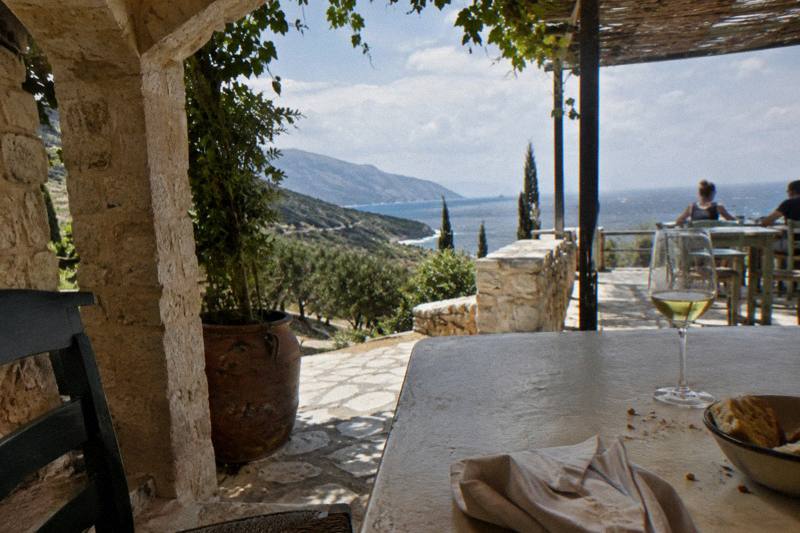
What Kind Of Wine Is Robola?
Robola is the white wine grape of Cephalonia: a 100 percent single-variety PDO wine registered in 1981, grown on the Omala plateau under Mount Ainos. Here is what the record says and which tours pour it.
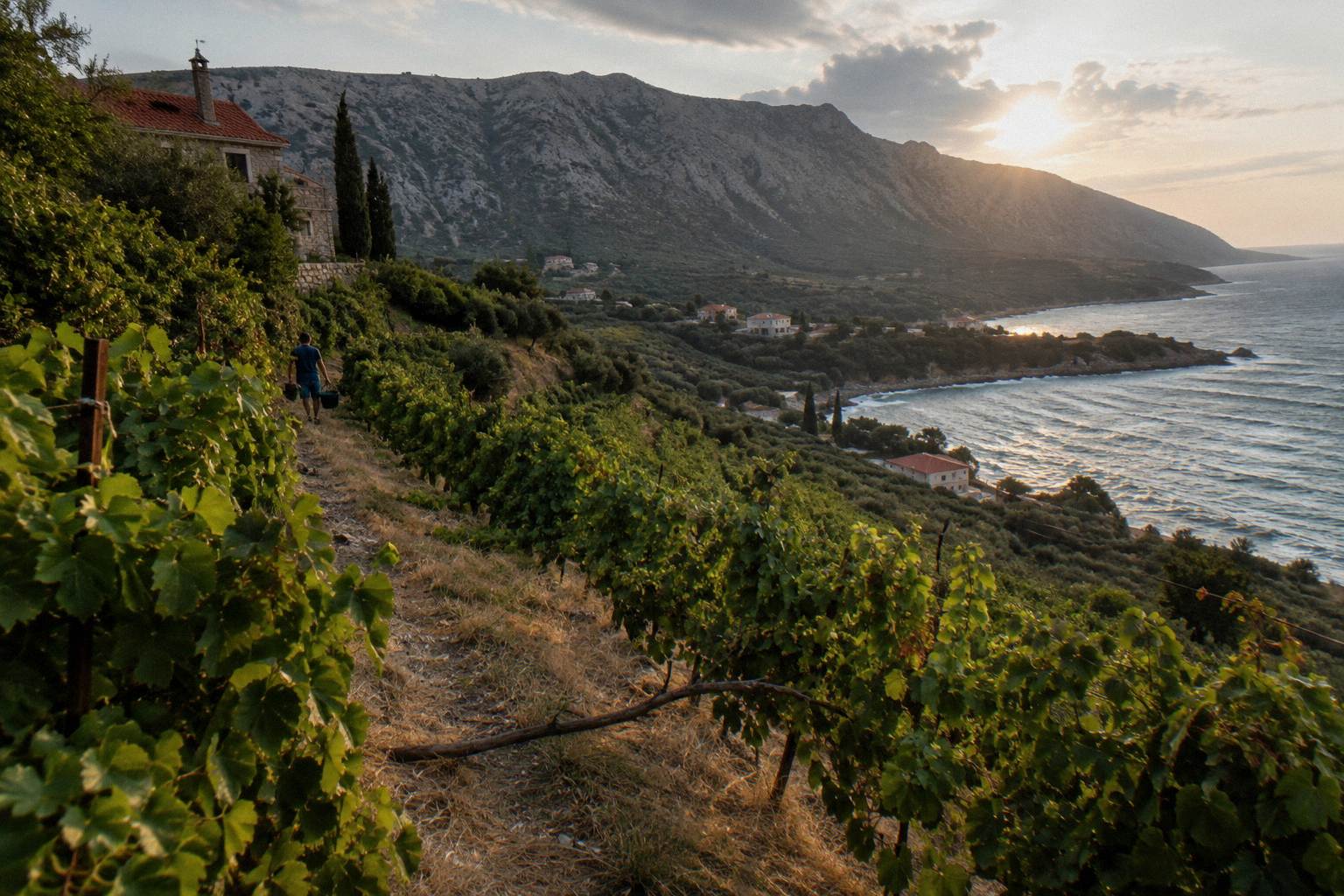
Robola is a Greek white wine grape grown on Kefalonia, and the wine of the same name must be made from 100 percent Robola to carry the Robola of Cephalonia PDO, registered in 1981. The zone sits on the Omala plateau under Mount Ainos, between roughly 175 and 800 metres, and the island's cooperative and several visiting wineries pour it.
That is the whole factual answer in one breath, and everything else on this page builds out from it. The point worth holding onto is that Robola is both a grape and a legally defined wine. Under Greek and EU rules, a bottle labelled Robola of Cephalonia has to come from a named zone and from a single variety, with nothing blended in. That is a stricter definition than many Greek whites carry, and it is the reason the name shows up on so many Kefalonian tasting lists.
The records behind this page stop deliberately short of describing how the wine tastes in the glass. For tasting notes, colour claims and food pairings, the honest answer is that you should form them at the counter yourself. What the verified record does cover is the grape, the law, the zone, the harvest calendar and the places confirmed as open to visitors, and those are the parts a first-time visitor usually gets wrong.
If you want the full zone breakdown, the communities involved and the regulatory detail, the deeper dive lives in the Robola of Cephalonia PDO zone guide. This page stays on the question itself and on getting you to a glass of it on the island. For the wider grape-by-grape picture, Greek wine explained for island travellers is the companion read. Between those two pages and the tour rows below, you should be able to move from "what is this grape" to "which day trip pours it" without guessing at anything.
Is Robola A Grape Or A Region?
Both names exist, and this is where most visitors get tangled. Robola is the grape variety, and Robola of Cephalonia is the PDO wine made from it, 100 percent, inside a legally drawn zone on Kefalonia. The wine is named for the grape rather than for a village, but the zone itself is specific: the Mount Ainos area and the Omala plateau, per the EU publication of the designation.
Greece draws a distinction that travellers from France or Italy sometimes miss. PDO status covers former appellation-of-origin wines, and PGI covers local wines and some traditional appellations, with 34 PDO wine locations across the country and more than 100 PGI wines, as outlined by Discover Greece's overview of Greek wine tasting. Robola of Cephalonia sits in the stricter PDO camp, and the registration dates to 1981, per the official PDO profile on Wines of Greece.
So when a tasting menu on Kefalonia offers "Robola", you can reasonably ask which it means. At the cooperative in Omala and at the island's estate wineries, it will be the PDO wine. In a supermarket or on a ferry, a bottle labelled with the grape but without the PDO wording is a looser category, and the label will tell you which you are holding. The zone runs across the communities of Omala, Davgata, Dilinata, Troianata, Faraklata and parts of Moussata and Vlachata, at altitudes from about 175 up to 800 metres. The full legal geography, including the minimum altitude rules, is covered once, in full, in the guide to the PDO zone around Omala and Mount Ainos.
The practical upshot for a visitor is simple. Any bottle with the full PDO wording was grown inside that zone from that one grape, and you do not need to know anything else about Greek wine law to order it with confidence. Anything else on a list is a wine made from the same grape under looser rules, which may still be good, but the label is doing less work for you.
Where Does Robola Come From On Kefalonia?
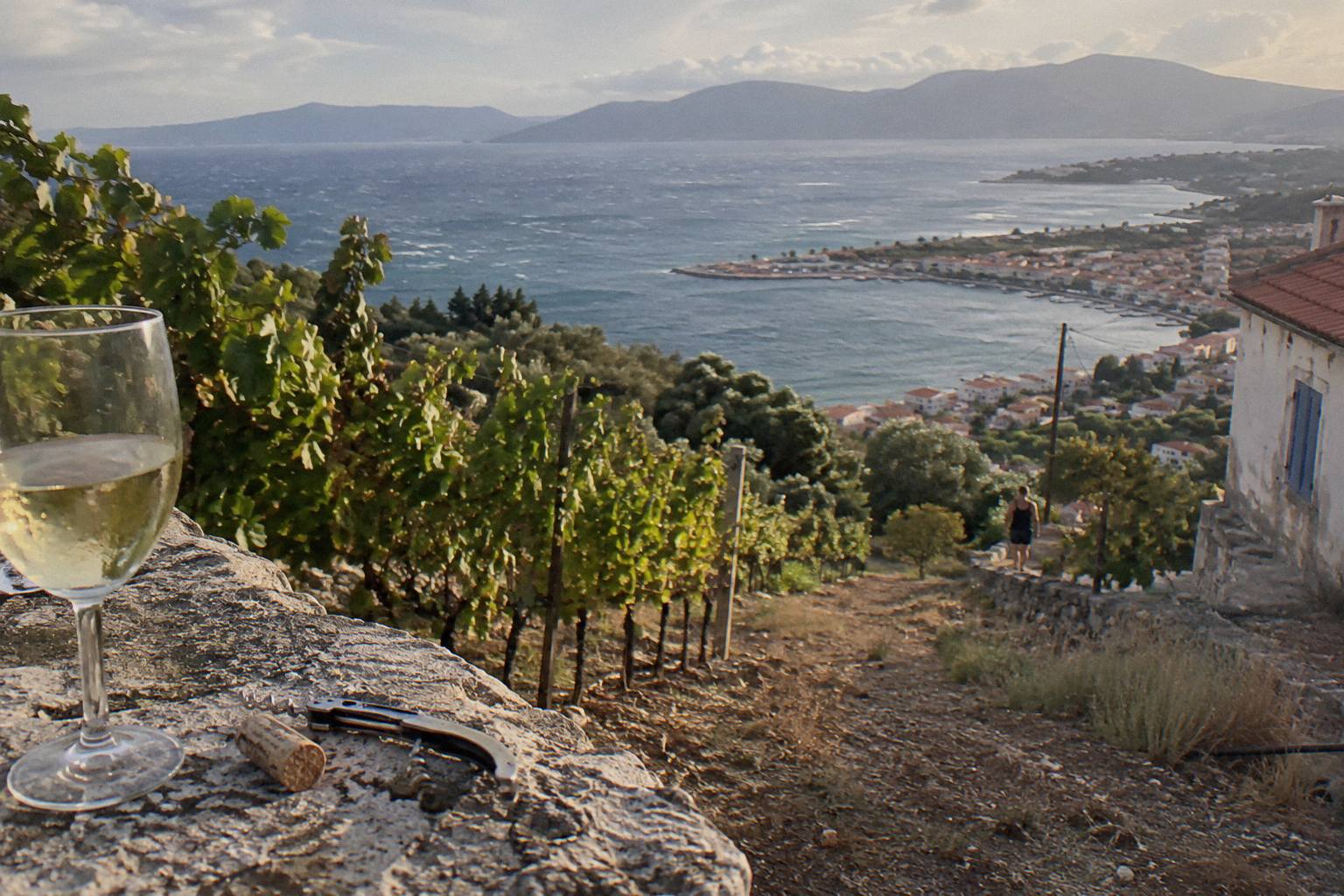
Robola's home ground is the Omala Valley on the slopes of Mount Ainos, and the easiest single place to encounter it is the Robola Cooperative near the Agios Gerasimos monastery. Founded in 1982 with about 300 growers, it pours free tastings on weekdays, with longer opening hours from May to October, and it sits at roughly 410 metres in the valley.
The monastery and the winery are neighbours, which is why so many island itineraries bundle them. The cooperative is the volume engine of the appellation, pooling fruit from those hundreds of growers, and it is the stop that the big bus tours use when their listing says "Robola Winery". If you take a group day around the island, this is almost certainly the Robola you will be poured.
Beyond the cooperative, tourism sources list five wineries on Kefalonia as open to visitors: Gentilini, Sclavos, the Robola Cooperative, Haritatos and Petrakopoulos, per the winery visitor list maintained by Entrée Cuvée. That list is where the record stops: opening hours, tasting formats and prices for the private estates are not in the verified record, so confirm those directly before setting out. Two further names, Vassilakis Distillery-Winery and Orealios Gaea, appear only as stops named by one tour listing on this site, not as confirmed visitor wineries in their own right.
Harvest runs September to October, and the Robola festival lands in late August, just before the grapes come in. For what that timing means for crowds, heat and what you will actually see in the vineyard, the seasonal breakdown lives in when to plan winery visits on Kefalonia. If your dates fall in late August, the festival is the one moment in the year when the whole valley is openly celebrating this single grape, and it needs no tour booking to enjoy from the sidelines.
Which Tours Actually Pour Robola?
Several listings on this site name Robola explicitly. The Robola Winery, Lake And Fiscardo tour by Kefalonia Sightseeing & Tours includes a free wine tasting at the Robola Winery and runs 7 hours from €40 per person. The Island Bus Tour by Kefalonia Excursions also stops at the Robola Winery, 8 hours from €40 per person, rated 4.8 across 395 reviews.
The first of those is the natural pick for this question, because the winery visit is in the tour's own name. The 7-hour day by Kefalonia Sightseeing & Tours pairs the Robola Winery tasting with Melissani Lake and Fiscardo, with hotel pickup or a nearest meeting point included, and cave entrance fees paid separately. It is rated 4.8 across 12 reviews, a small number of reviews, so weigh it as a promising signal rather than a verdict. You can read the full itinerary and check availability on the live listing.
The second is the heavier-duty option. The Island Bus Tour by Kefalonia Excursions runs 8 hours and strings together the Robola Winery, Agios Gerasimos Monastery, Drogarati Cave, Melissani and Fiscardo, with the wine tasting and pickup included and the cave entrance fees excluded. Its 4.8 rating across 395 reviews is one of the deepest review pools on this site, which makes it the best-evidenced Robola stop in the roster. Free cancellation applies on a 24-hour window for both tours.
Can You Taste Robola Without A Full Day Tour?
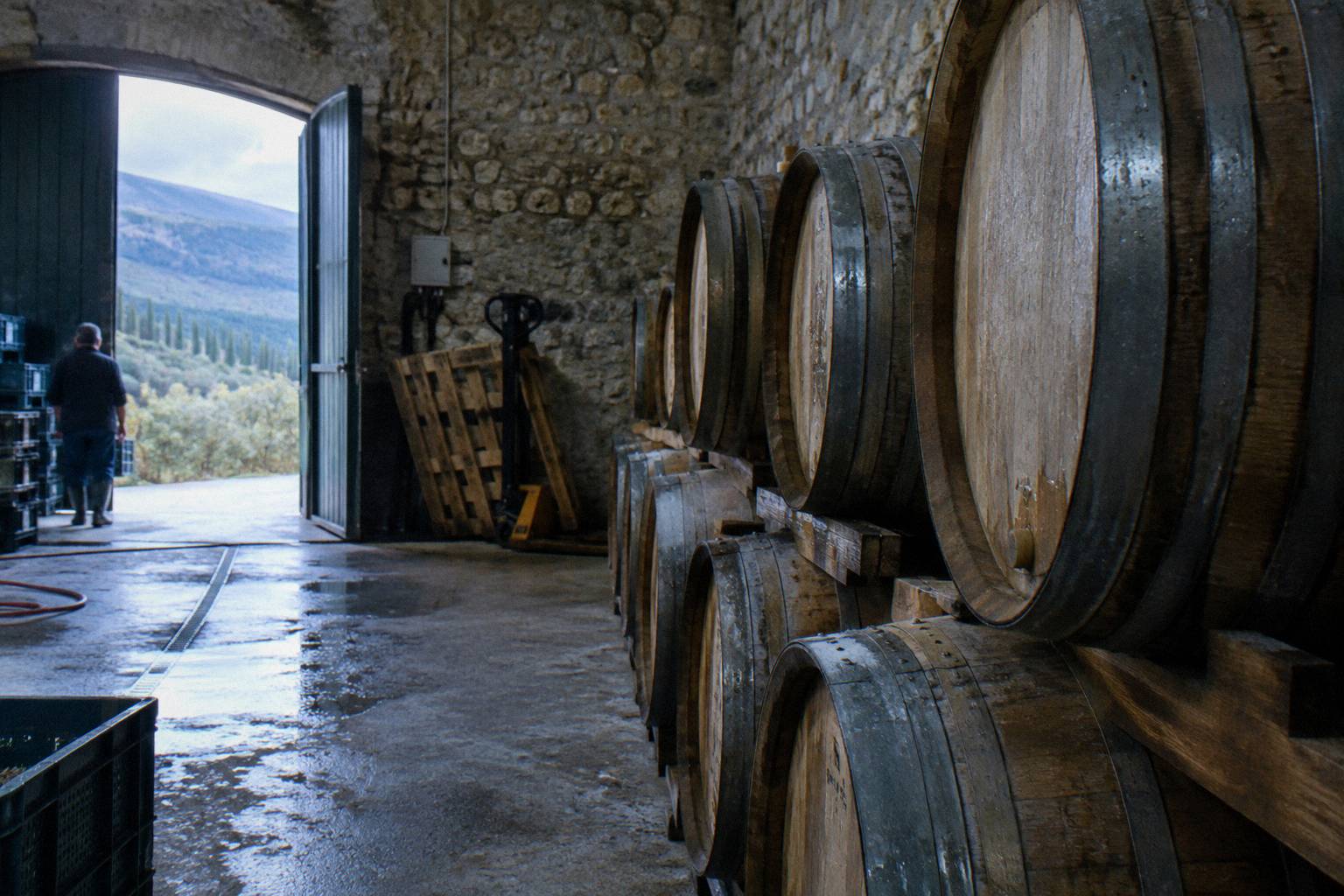
Yes. Two short options pour Kefalonian labels, and one names Robola outright. The 50-Minute Tasting, 3 Labels by Kefalonia Excursions runs from €25 per person at a wine shop on the Argostoli waterfront and pours Robola, Vostilidi and Mavrodaphne. The Wine Bar Workshop, Snacks by UNEXPLORED KEFALONIA runs 1 hour 30 minutes from €60 per person and includes Robola among 5 labels.
The 50-minute tasting is the cheapest per-person experience on this entire site, and the only one of the two that lists Robola by name alongside its PDO siblings. It takes place at The Vine wine shop on Leof. Ioannou Metaxa 40 in Argostoli, is restricted to ages 18 and over, and comes with olive oil, vinegar and cheese alongside the three wines and a sommelier leading the session. It carries no printed rating on its listing, so judge it on the format and the price rather than on a score.
The Wine Bar Workshop is longer and more structured. Its listed inclusions read like a class: professional glassware, tasting mats and notes for each participant, step-by-step training in tasting technique, bottled water as a palate cleanser, and a wine expert leading the session through five Kefalonian labels. It explicitly excludes a full meal, transfers to and from Oinos wine bar in the Skala area, and anything ordered beyond the five-label flight. It also carries no printed rating. If the technique side appeals more than the sightseeing, this is the listing built for it; the counter question of whether short tastings earn their price is worked through in how much a winery visit costs on Kefalonia.
What About Private Options For A Robola Day?
Private Robola days exist on both coasts of the budget. The Private Wine Tour, Snacks by SEVEN Sailing & Tourism runs 4 to 5 hours from €146 per person with tastings, mezes and snacks included. At the top end, the Private Shore Tour, Oil And Honey by taxiGo DMC runs 5 hours 30 minutes from €363 per person, but its wine tasting is paid separately, not included.
The first of these is priced per person for a private or semi-private format, includes the wine tasting, mezes, snacks, alcoholic beverages and all fees and taxes, excludes lunch and gratuities, and sets a minimum age of 18. Its rating is 5 across 1 review, a single review, which is too small a pool to lean on, so treat the itinerary and the inclusions list as the real evidence.
The taxiGo DMC shore tour is the most expensive per-person product on this site, and the caution matters here: its honey, olive oil and wine tastings are listed under exclusions, paid on site, so the headline price buys the private vehicle, driver, guide and port logistics rather than the tastings themselves. It is also the one row on this site without a free-cancellation line, so read the terms on the live listing before committing.
The Island Bus Tour by Kefalonia Excursions remains the value counterweight to both: 8 hours, Robola Winery tasting included, rated 4.8 across 395 reviews, from €40 per person.
Can Cruise Passengers Reach A Robola Tasting?
Yes, and one listing is built for exactly that. The Fiscardo Shore Excursion, Wine by Avalon Travel Kefalonia runs 5 hours 30 minutes from €140 per person in groups capped at 16, and includes a visit and tasting at the Robola Winery plus Melissani Lake entrance and Fiscardo port pickup and drop-off.
Argostoli's cruise port sits on the central waterfront, with ships docking at the pier or tendering into the central harbour depending on the ship and traffic, which means winery time is a short drive rather than a logistics project. The Avalon small-group excursion adds Assos to the Robola Winery and Melissani stops, excludes food and drinks, and carries free cancellation on a 24-hour window. It prints no rating on its listing.
For a broader comparison of what fits inside a port call, with food and wine both in the frame, see the site's guide to shore excursions from Argostoli. The site, Kefalonia Wine Tasting, keeps a full roster across winery tours, food tours and island days if you want to compare beyond the Robola-specific rows. Whichever way you arrive, the tasting itself is the same pour, and the only variable is how much island you see around it.
How Does Robola Fit With Kefalonia's Other Wines?
Robola is one of three PDO wines registered on the island. The other two are Mavrodaphne of Cephalonia, a sweet red fortified wine from western Cephalonia including the Paliki peninsula and the Elios-Pronni area, and Muscat of Cephalonia, a sweet white from the Paliki peninsula, per the Wines of Greece PDO profiles.
A flight that says "three labels" very often means one from each family, which is precisely what the 50-Minute Tasting pours: Robola, Vostilidi and Mavrodaphne. Vostilidi, it should be said, is a fourth Kefalonian grape that appears in the tasting rows but not in the verified PDO record, so this page claims nothing for it beyond the listings that pour it.
The Muscat of Cephalonia zone takes in Lixouri, Zola, Katogi, Soulari, Skineas and Havdata on Paliki, per the official PDO profile for Muscat of Cephalonia. Where the registration years conflict between sources, this site prints none. For the sweet red side of the family, the dedicated read is Mavrodaphne of Cephalonia, the sweet red wine. For the everyday eating context these wines sit in, what to eat in Kefalonia covers the island's dishes as the tours name them.
How Much Robola Can You Take Home?
Checked-baggage wine is the safe route. In cabin bags, EU rules limit liquids to containers of 100 ml or less inside one transparent resealable one-litre bag, so a full bottle travels in the hold. Into Great Britain, the personal-use allowance is 18 litres of still wine; into the United States, one litre of alcohol duty-free per traveller aged 21 or over, with more dutiable.
Those three numbers come from official sources: the EU cabin-baggage liquid rules on Your Europe, the UK personal-import allowance, and the US customs allowance. Greece's currency is the euro, so winery shop purchases run in euro cash or card, and there is no duty-free trick inside the EU itself. Anything agricultural, including olive oil, must be declared on arrival in the US and is subject to inspection.
Practical Notes Before You Book A Robola Tasting
Four things to settle first: your dates versus the September-to-October harvest, your port or hotel location, the age minimums on each listing, and who is driving afterwards. Greece's drink-drive limit is very low, so nobody who has tasted should drive; every tour row on this page that lists transport solves that problem for you.
Greece sells and serves alcohol from age 18, and the individual listings repeat it: the 50-Minute Tasting, the Wine Bar Workshop, the E-Bike Wine Tour from Lixouri and the private rows all set 18, while one private tour sets 17. Children on a wine day is a real question with real answers per format, covered separately in are winery visits in Kefalonia OK for kids. The driving question, including why the e-bike and walking formats exist at all, is worked through in can you drink and drive on a Kefalonia winery day.
On timing, most of the day tours here run 7 to 8 hours, and the short tastings under two hours, so the real choice is between an island day with a Robola stop or a counter tasting in Argostoli. The decision framework for that split lives in how long a winery tour takes on Kefalonia. If you are splitting a week between beaches and wine, one full island day plus one short tasting covers Robola thoroughly without giving the whole holiday over to it.
If you want to know where the Robola on your table can legally come from, the PDO zone is specific: the Mount Ainos area and the Omala plateau, taking in the communities of Omala, Davgata, Dilinata, Troianata and Faraklata along with parts of Moussata and Vlachata, at altitudes from roughly 175 to 800 metres. A bottle labelled Robola of Cephalonia is 100 percent Robola from that zone and nothing else. The Robola Cooperative at Omala sits in the valley near the Agios Gerasimos monastery at about 410 metres; it was founded in 1982, a year after the PDO was registered, and draws on about 300 growers. Its tastings are free and it opens weekdays 9 to 15, with longer hours from May to October, which makes it the simplest stop to slot around a hire-car day.
For timing, note the harvest runs September to October, and the island marks the run-up with a Robola festival in late August, so late-summer and early-autumn dates put you closest to the action. Prices on this page are in euro, and other Kefalonian wineries documented as open to visitors include Gentilini, Sclavos, Haritatos and Petrakopoulos if you want to compare beyond the rows above.
| Tour | Operator | Duration | Robola named? | From | Rating (with count) |
|---|---|---|---|---|---|
| Robola Winery, Lake And Fiscardo | Kefalonia Sightseeing & Tours | 7 hours | Yes, free tasting at Robola Winery | €40 per person | 4.8 across 12 reviews |
| Island Bus Tour, 8 Hours | Kefalonia Excursions | 8 hours | Yes, Robola Winery stop | €40 per person | 4.8 across 395 reviews |
| 50-Minute Tasting, 3 Labels | Kefalonia Excursions (The Vine) | 50 minutes | Yes, one of 3 labels | €25 per person | none printed |
| Wine Bar Workshop, Snacks | UNEXPLORED KEFALONIA | 1 hour 30 minutes | Yes, among 5 labels | €60 per person | none printed |
| Fiscardo Shore Excursion, Wine | Avalon Travel Kefalonia | 5 hours 30 minutes | Yes, Robola Winery visit | €140 per person | none printed |
| Private Wine Tour, Snacks | SEVEN Sailing & Tourism | 4 to 5 hours | Robola tasting on site | €146 per person | 5 across 1 review |
Whichever row fits, the wine underneath them all is the same one: a white grape from the slopes of Mount Ainos, bottled alone under a PDO that dates to 1981, and poured within a short drive of wherever this island finds you.
Common Questions About Robola
What Kind Of Wine Is Robola?
A Greek white wine grape from Kefalonia. The PDO wine of the same name must be made from 100 percent Robola, was registered in 1981, and comes from the Mount Ainos and Omala plateau zone. The record stops short of tasting notes, so form your own at the counter.
Is Robola White Or Red?
White. It is the island's white PDO grape, while the red side of Kefalonia's PDO family is Mavrodaphne of Cephalonia, a sweet fortified wine from the Paliki peninsula and Elios-Pronni.
Where Is Robola Grown?
In the Mount Ainos area on the Omala plateau, across the communities of Omala, Davgata, Dilinata, Troianata, Faraklata and parts of Moussata and Vlachata, at altitudes of about 175 to 800 metres.
Can I Visit A Robola Winery?
Yes. The Robola Cooperative in the Omala Valley pours free tastings on weekdays with longer hours from May to October, and tourism sources list Gentilini, Sclavos, Haritatos and Petrakopoulos as open to visitors too. Several tours on this site include a Robola Winery stop.
When Is Robola Harvested?
September to October, with the Robola festival held in late August just before the grapes come in.
What Is The Cheapest Way To Taste Robola On Kefalonia?
The 50-Minute Tasting, 3 Labels in Argostoli, from €25 per person, pours Robola among its three labels. It is the lowest per-person price on this site.